BE06. Joining Anne-Marie as a featured guest on Free Fertility, Jamie Massey steps in to share the game-changing insights gathered from interviewing over 100 women who had babies after 40. Together, they break down why real proof beats clinical statistics and how taking back your mental power transforms the entire fertility journey.
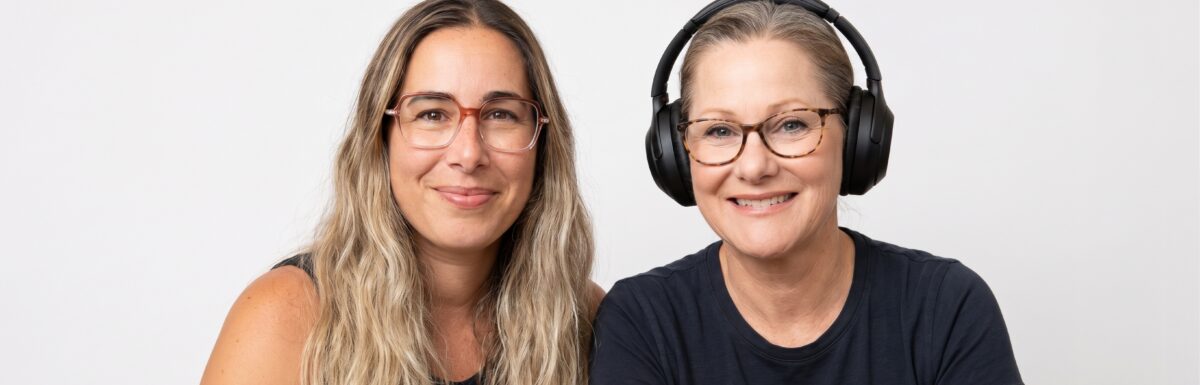
On bonus episode 6, Jamie Massey shares a podcast episode she was a guest on, hosted by Anne-Marie, Fertility and Emotion Healing. This is from her Fertility Journey Video Series: I’m joined by Jamie Massey, host of the Over 40 Fabulous and Pregnant podcast, who has spent years interviewing women on their fertility journey and collecting something medicine rarely offers: real stories, real outcomes and real hope.
Jamie started her podcast while trying to conceive at 40. What she built became something far bigger than she expected. Over 100 conversations later, she shares what she has learned about what women on this journey actually need, and it is not more information.
In this conversation, Jamie talks about why the mental side of fertility is still treated as an extra rather than a necessity. Why women are asking themselves the wrong questions and what happens when they start asking better ones. Why age is far less of a barrier than we have been led to believe and why the most powerful thing a woman can hear on this journey is another woman’s story.
We also talk about something I feel deeply in my own work: the body that is contracted and closed when it needs to be open and what actually helps it get there.
This episode is for you if you have been on this journey for a long time and are starting to lose faith. If you feel alone in it. If you need to be reminded that you are still in the middle of your story, not at the end.
About the Host and Free Infertility
Anne-Marie Pereira is a Clinical Hypnotherapist, Rapid Transformational Therapist® (RTT®), and Fertility Emotional Healing Therapist who specializes in guiding women through the unaddressed emotional, mental, and subconscious layers of their fertility journeys. On her platform at FreeInfertility.com, she created her Fertility Series as a space dedicated to bringing women compassionate, grounded, and empowering conversations that shift the narrative away from rigid clinical statistics and isolation. Through deep-dive interviews with leading reproductive experts and real women who have walked the path—including Jamie Massey—the series focuses on releasing nervous system stress, overcoming internalized beliefs, and restoring self-trust and hope so women feel deeply seen, supported, and capable of creating their families.
Connect with Anne-Marie Pereira:
- Instagram: @freeinfertility
- Website: Free Infertility
- YouTube: @freeinfertility
Key Topics
- Shifting the Fertility Narrative: Why real proof and stories from women who have conceived over 40 provide far more hope and actionable power than clinical statistics or age-based limitations.
- The Role of Mindset and Self-Coaching: How asking the wrong questions (like “Why am I not pregnant?”) causes the brain to invent disempowering answers, and how intentional thought management transforms the journey.
- Overcoming Isolation Through Community: The vital importance of peer connection and shared experiences in breaking down the mental loneliness of trying to conceive.
- Self-Advocacy with Medical Providers: Questioning doctors, stepping off the automated “fertility clinic conveyor belt,” and taking full ownership of your treatment decisions and supplement protocols.
- Reconnecting with Your Body’s Natural Signals: Reclaiming internal body awareness—such as tracking basal body temperature and understanding cycles—rather than relying solely on external tests and clinic authority.
- Navigating Intrusive Thoughts Across Motherhood: Addressing how anxiety, fear, and imposter thoughts don’t automatically disappear upon pregnancy or birth, and why mental health work is just as essential during pregnancy and postpartum.
- Giving Circumstances Neutral Meaning: Using a intentional framework to plan how you want to think, feel, and act regardless of whether a transfer or test result comes back positive or negative.
Transcript
Anne-Marie: Today, I’m joined by Jamie Massé, host of the Over 40 Fabulous and Pregnant podcast, and a woman who has lived this journey herself. After four losses, a failed egg retrieval, and years of trying, Jamie became a first-time mom at 43 using donor eggs. She now hosts over 100 episodes of real stories from real women who got pregnant over 40.
I brought her here because no medical statistic can do what a real story does, and Jamie has collected over 100 of them. What she has built is something I genuinely believe the world needs more of. In a space where so much of what women hear focuses on the hard parts and the limitations, Jamie has created something that shows what is actually possible.
Real women, real outcomes, real proof. Not what they were told to expect, what actually happened. That kind of hope is rare, and for a woman who is starting to lose faith in herself, her body, her fertility, that may be everything. Let’s get into it. Jamie. Jamie, this series exists for one reason, to bring women on a fertility journey the conversations that actually help.
The ones that remind her she’s not alone, that other women have walked this road and found their way through. They need to feel seen, supported, and reminded that this is possible, and that’s exactly what you bring. Over 100 real women, real stories, real outcomes. I’m so happy you said yes, and truly grateful you’re here today to share what you have learned from your own experience and from every woman who has trusted you with theirs.
Jamie, thank you for being here.
Jamie: Anne-Marie, thank you so much for having me. I’m so glad to be here.
Anne-Marie: So Jamie, so much of what women hear on this journey focuses on the hard parts and the limitations. What made you want to create something different?
Jamie: I guess I didn’t quite know it was different when I was trying to conceive at 40.
It was really something that I needed, and I thought I was gonna create a podcast for women who were already pregnant, and it really turned its head onto something that this is what I needed. And it in the process, I figured that out, that I needed it, and so did a lot of other women
Anne-Marie: Wow, that’s beautiful how sometimes projects start from something we need in the end, right?
It’s more- Yeah … for ourselves at the beginning. It’s amazing. And how do you feel this whole experience shaped the way you hold space for these women?
Jamie: I really understand how different all of our journeys are, and that’s kind of something that I really like to speak on, is like I love to disagree and I love to have different thoughts because that’s when we can really understand and be more passionate about what we want in our journey.
I’ve really held that close, and that has really helped me understand my journey.
Anne-Marie: And we really feel that when we hear you having those conversations in your podcast. It really feels like these are real conversations with two real people sharing everything around the journey, the difficulties and the really good parts as well, but it really feels.
And after over 100 conversations, what have you learned about women on this journey, what they actually need?
Jamie: What they need A lot of it, I think it’s mental, and I think it’s community. I think we have those experts. I think the information is out there. I don’t think that’s the problem. I think it’s the community and not feeling alone, and it’s getting out of that mental space of how much this sucks, and that it can be better if we’re here together and doing it together.
Anne-Marie: Yeah. I feel also the community part is becoming more and more clear also in how lonely women feel on this journey. And I have actually a question. When you talk about the mental part, can you go a bit further into what this means?
Jamie: The mental part, like just for example, like I think as women who are trying to conceive, we’re asking ourselves the wrong questions most of the time.
At least that is a huge part of my experience. I keep asking myself why am I not pregnant? Why am I not pregnant?” And our brain wants to answer those questions, and when we don’t have real answers, we come up with some really dumb stuff. We often think because we have all these social constructs that have already been pre-thought for us, we have a hard time getting over that hurdle, and it’s like I almost laugh when I hear a woman, message me and say they’re 41 and they think they’re too old.
Because I’ve heard these stories for so many years, it’s like age is not a problem anymore. And I’m 45, and I’m like, “Hey, my husband doesn’t want another. No problem. I have some time. It’s not a big deal.”
Anne-Marie: Yeah. You made me smile also sharing this, because I was telling you just before we started to record that actually back seven years ago, I would speak to women 43, 44, and today women as early as 29 are told exactly that.
It feels like there’s … We’re not really going into the right direction into how we are communicating to women and about the capacity, capabilities of their bodies. It feels like very easily, very early, very at the beginning of their journey, they’re already very directed into what they should think about their body, already being too old- already being too late.
Jamie: And when you have someone saying that you’re too old, like our brains are a powerful machine, and if we’re telling ourselves those things our body can’t really do it either. I’m sorry, I think I interrupted you.
Anne-Marie: Don’t worry. Yeah, what you said is exactly the way I think and the, and how I see our thinking and a lot of the times what we’ve heard in the past as children, et cetera, impact us as adults.
So I really feel it’s about how I think about my body, how I think I deserve or not something, how I feel something will impact me or not. We don’t really see it, but it does impact how my body will react, how my hormones will work. So yeah- … that’s really aligned with the way I think as well, so thank you for your comment.
You were talking about age, and of course I knew we were going to talk about that because that’s what we see all over the internet and women feeling already very late even before 40 sometimes, as we were saying. What other topics do you see come up over and over again in the interviews that we, you have with these women?
Jamie: Around age?
Anne-Marie: A- around other topics. Or- So there’s age of course, but what other topic do you see coming up very very often in your interviews with them?
Jamie: Oh, eggs are such a huge thing. Even just with comments on Instagram. Everyone goes, “Is it your eggs? Is it your eggs?” And sometimes I just wanna say, “It doesn’t matter.”
Other times it’s also limitations of our bodies. Some people think if they’re older, that they can’t breastfeed. It’s interesting how women choose their doctors. I think learning about our bodies, that’s actually a big topic, is the fact that a lot of these women don’t know their bodies, about ovulation, about temperature, and it’s mind-blowing.
Even when I first started, and I’ve learned more about, our bodies and our temperature and how our bodies are fertile, it’s just that is probably one of the biggest ones. I did one of my favorite interviews, Jodi. She knew exactly when she was pregnant before a pregnancy test could tell her.
And it’s like we rely on these tests to tell us if we’re ovulating. We’re, we rely on these tests if we’re pregnant, in fact, and it’s like here’s a woman who knew all of that information without any… besides a thermometer that she does, takes her basal temperature every morning. But that is really a powerful thing that is also actually missing from our education.
Anne-Marie: It feels like we’ve been led to think that somebody else know better than-
Jamie: Exactly
Anne-Marie: … than we do about- Yeah … about ourselves, about our bodies. It feels when I think of when I was pregnant, I f- I felt like I didn’t know anything. So I learned-
everything that happened for me was after I already had my kids, when I started to actually question myself and things and what I had been told and what I thought was mine and wasn’t and everything.
When I look back, I feel like I really trusted everything outside.
Jamie: Yes.
Anne-Marie: It feel like we’ve been led to think that somebody else, the clinic, the, the doctor, whatever, will know better than we do. And it’s like what you-
Jamie: Exactly
Anne-Marie: … say, we’re not taught to and know ourselves, know our cycle, know what’s, what our bodies are capable of doing.
And today I actually see more and more women interested in these topics, and I’m learning as I see other women learn as well. And I feel, wow, it looks like we’re getting this knowledge back. This is coming back to us. But it feels like we’ve been led, and we’ve just let all of this knowledge go somewhere.
And women really feel that they have no power, no knowledge. And that’s why it’s so easy when you were talking about the mental part, it’s so easy to let in anything that is said because without knowledge, we just think that whatever they say is right. So it’s very easy to start believing we’re too old.
It’s very easy to start believing that our body will not be capable of. It’s very easy to feel like I c- I can’t choose around, decisions that you have to make around whatever moment of the journey. It really feels like somebody else will have to take the decision because I don’t know.
Jamie: Yeah.
Even questioning doctors, I think we are really hesitant to do. Someone told me she had five failed transfers. And I said, “Are you, what are you doing? What are you taking? What’s your vitamin D level?” And she’s “I don’t know what my vitamin D level. He said I don’t need to take it.”
I think some supplements are f- are fine to take, but it’s also like we need to know what is in our body before we can supplement it. Supplements are there to supplement what is not in our body, and I think getting tested and questioning doctors is really important in our journey.
I don’t think I did a great job at it sometimes, ’cause you do, you get on that conveyor belt of a fertility clinic, and they don’t ask you questions or want to know much about you. You’re just like this robot and … or, cattle just shoved into the cattle, “This is what you do. Get on the conveyor belt. Let’s do this.” And it’s r- it’s really unfortunate.
Anne-Marie: Yeah. I really feel what you say. And it’s there’s so, so many things that start to make sense, right? It’s like I remind women sometimes that, our grandmothers, great-grandmothers had also babies after 40. It’s not something that’s new today.
We need to remind ourselves that maybe the, today’s narrative is not really what’s true, and questioning- … as you were saying, is so important. But at the same time, in my work I work a lot around the mind, around the thought, around the belief that people hold around their fertility.
And what I see is that we’ve on- all been told since childhood that the doctor knows. And so-
Jamie: Their authority
Anne-Marie: … exactly. And so I think sometimes I work with hypnotherapy in my work, and I see sometimes one sentence that doctor said when they were very young is exactly what’s happening today as an adult.
And you will not always link it, but it’s the thing, if you don’t question, then you, whatever you hear, for you it’s the truth, and you’re not gonna even- … question that your body may be capable of something else, because that’s the truth. So that, that will somehow incredibly, strangely impact the body exactly on whatever you believe in around your body.
So I’ve seen that. But it’s important that we remember that, it’s not just now that we’re having babies after 40. It happened in the past, so it can still happen today. But somehow we’ve forgotten. Sometimes-
Jamie: Yeah
Anne-Marie: … we’ve led women to forget that, there’s a lot of women. There were a lot of women before, and there’s still a lot of women, as, those hundreds of interviews that you’ve done of women that have had healthy pregnancies after 40.
So it’s very important that we communicate more and more on that. We’re, you were talk- Yes
Jamie: What I was gonna say was maybe that’s different. You said that it’s nothing new to have kids in your 40s, which is true. I think what is different is that a lot of us are starting later. We’re starting a family, we’re finding love later, and I don’t
Does that make a difference? I don’t know. If I’ve already had five kids, does it make number six easier, or is number one easier? I don’t know what the research is on that, but it is … It’s definitely different.
Anne-Marie: Of course, it’s not the same moment in time, right? But it’s still possible, and that’s the-
Jamie: Definitely
Anne-Marie: most important thing we need to communicate on. And there’s, when you were talking about the mental part and the community, I’ve reached out to a few IVF clinics here in Portugal, and there’s something that really strikes me, and I would like to have your views on that. Maybe around your experience and these women experience, I see very little orientation around the mental health.
So of course, there’s part of the process when you have egg donation, for example, where you do have to sit down with a, psychotherapist to get all set for for the next step of the process. But I see very little orientation, guidance for women to actually have help and feel seen, understood during the journey.
And when you actually look at studies that have been done around mental health that can bring better results to women going through treatment or IVF- Even studies around the impact of hypnosis, helping them have a different mindset, how they can prepare their mind better to welcome the transfer, to open their bodies when usually what’s happening it’s very contracted because of the whole process, because of everything they’ve been through, because of the coldness of the process sometimes.
And how this mind-body orientation can help them have a whole different way of receiving the treatment. I don’t understand still why there is no orientation as to helping women, guiding women through, this route of, okay, if you take better care of your thoughts, feeling, and emotions, then you’ll have better results.
Because you can see in those studies that you can have better results as to 25%, 30% depending on the analysis. And that would make sense to me based on studies done more than 20 years ago, that today this would feel so natural, and it doesn’t. What’s your views on that, and what have you felt from these interviews that you’ve done up until today?
Jamie: Honestly, I don’t look at studies or stats ’cause that’s my thing, right? We are not about stats. We are individual people. So I don’t do a lot of research on that part, to be fair. I think support in our mental health lacks really across the board. And fertility is just one of them, and we’ve just added this on, like cancer.
Oh my gosh, those … That group of people, the family members, also need support just as much as we do too, like everybody does across the board. And I think it’s almost looked at like an extra and not a needed. I know there are clinics here, some of them in the US do have a support system connected to them.
I wish more did, and it’s how do we link those up? Maybe that’s more the question. But I know CCR out of Colorado, they have a support group connected to that, and I think it’s just so important because, honestly, fertility doctors are like the, like, unemotional people.
There’s no emotion, no nothing extra going on there. And so I think we need it. We do need it. And how we get that, I’m trying to fill that void, and I think just… I’m not an expert. I’m not a therapist or anything, but I can connect women to be able to share their feelings. And, I think a therapist, that is probably one step up.
But just having access to your peers and other women who are trying to conceive along with you is just Oh my gosh it’s so much connection, and you don’t feel alone is such a big part of the security in your journey
Anne-Marie: I feel whatever supports you in any way that you choose it- yeah … then as I was saying, like what I see in these women that I work with, I see a body that’s closed, that’s contracted instead of opening, which is what you would want to receive a baby, right?
So anything that- … actually helps that, whether it’s a support group, whether it’s having somebody you can share your feeling with, whether it’s a therapist or … But I feel like those clinics actually should have a duty for these women to feel good when they go to treatment, to feel they’re in the right place.
They feel like instead of being scared and contracted and everything, okay, they come and it’s gonna be something, I’m working towards my baby, something a lot more open. And so that’s why I feel like the conversation we are having and all of the conversations you’re having also on your podcast has really the intention to communicating a lot more on this part and how it’s important.
And maybe one question that I would have now for you is what do you feel is the common thing that all these women wish they would know earlier on their journey?
Jamie: I … The common answer is they wish they worried less. Okay. I think that is, I wanna say like 99% of that answer-
Anne-Marie: Okay
Jamie: is worry less. I think that’s, a lot of stress and having such a long journey, and then you’re pregnant, and all those thoughts and feelings and emotions don’t just magically go away whenever you’re pregnant. They carry throughout the pregnancy, and- do we need help getting pregnant and mental health?
Definitely. Do we need that mental health help during pregnancy? Yeah, definitely do. Throughout the journey, even all the way through motherhood, because it impacts you. I still have those thoughts and feelings into motherhood. I think I was listening to Tara’s story the other day, and she was talking about she did donor eggs also, and she talked about, “My child isn’t listening to me because I’m really not his mother.”
And I’m like, “Me too.” And you just … it hits you hard in, in different ways.
Anne-Marie: Yeah, that really is interesting in that sense that if you have those thoughts around whatever it is about, it will find a way to bounce you, right? So-
Jamie: Yeah …
Anne-Marie: I feel that and It’s really reminding ourselves all the positive we can get from everything, right?
Where do I want to focus my thoughts, feelings, and emotions? And, we’re women, it’s ups and downs forever. So it’s like- … we all have these moments, but it’s maybe reminding ourselves, and maybe also, as you were saying, having a community that helps you remind you that, whatever the way, you’re still the mother.
Jamie: Yeah. Yeah.
Anne-Marie: And as you were saying at the beginning, does it matter? Does it really matter in the end, yeah?
Jamie: And we’re all human, and the more we clean up our thoughts while we’re trying to conceive the better pregnancy we’re gonna have, the better motherhood we’re gonna have also. And I wish I did more of that myself.
Anne-Marie: And I feel like what you’re offering to these women is a way … So first of all, you give the opportunity for these women to be able to share their own stories, and sometimes maybe they haven’t told that to anyone else.
Jamie: Yeah.
Anne-Marie: So I feel that’s a really beautiful way of them being able to look back and understand everything they’ve managed to create, to do, to overcome throughout the journey, so that this is beautiful already for them.
At the same time, I think what you offer is for other women to see their own story as a mirror, and maybe see those positive outcomes that, oh, if she managed, I can also, yeah? So how do you feel that … I guess you’ve received tons of feedback on the podcast. How do you feel that shift is created in these women that are watching the podcast and understanding that’s a bit of a mirror to their own story and giving them a positive way of thinking about their story differently?
Jamie: Let’s see. What brings to mind is that you mentioned about sharing, and I think a lot of us are not telling a lot of people. We’re not telling coworkers. And I think as you mentioned being able to just openly speak about your IVF journey to people who understand is it’s just … I think it gives a lot of relief to women.
Anne-Marie: Yes.
Jamie: Another aspect, I have a lot of guests tell me how much just it was very therapeutic to tell their story from start to finish. And I think a lot of women reflect on that and see these women and the guests who are struggling and know that it is possible for them, too. I always think of Jessie and her story that took her 20 years to have a baby, and it’s 20 years.
And it’s like that woman never gave up hope And so I think it’s really a huge reflection not only of her journey, but her mental strategy of never giving up. Maybe I shouldn’t too. And I think that’s a big takeaway that I hear from these women that, “Hey, I’m in the middle of my story. It’s not at the end.”
Anne-Marie: And I feel that’s beautiful. That’s a beautiful opportunity. I think better than, than anything is really hearing another woman telling her story. I feel that’s really true. It’s not like a therapist saying what’s possible. It’s another woman that has been through all the steps, through all the ups and downs that’s telling her story, and I feel that’s a whole different way of receiving it.
So I feel how incredible it may be for these women to watch an interview that really reflects her own story and shows her something different to what she’s thinking about in that moment. We were talking at the beginning about how important it is to bring more positivity to this journey.
I spend quite a lot of time watching content that is published around fertility. I’m also on a few groups on Facebook, and I see so much negative talking, negative information online that I feel that there’s really a need for us to communicate a lot more on the positivity that you can manage to find on this journey.
Whether it’s difficult or not so difficult, but there’s a way of you still enjoying the journey, and I feel like what you’re doing and us communicating a lot more will help these women understand that, it can be really hard, and it’s true, but you can still find some joy in the process. So how do you feel around that?
Maybe talking about your own journey around, what all women do is going online, trying to find answers, going to forums, into discussions, into groups. And I think sometimes it’s taking you even in a more negative loop because you’re not only dealing with your own thoughts, feelings, and emotions, but in the end you’re dealing with all of these other women feelings, thoughts, and emotions.
I’d love to hear you a bit around how it was for you and maybe what helped you on your journey.
Jamie: Yeah, I think a lot of that is contagious, right? Sometimes these negative spirals, it’s like, “Oh, I need to think it’s bad, too.” A lot of people, I hear a lot of talk about their atopic pregnancies and how traumatic it was, and I was like, I was not traumatized by mine at all for whatever reason.
But I think that goes back to we need to get offline sometimes and not look for answers. I think it goes back to our mental health and really working on ourselves and asking us internally those questions instead of seeking for inter- external support device. And sometimes those are support groups, right?
They are external.
Anne-Marie: Yeah.
Jamie: But I think the power is truly within. And if we look externally for things, like all of the information, we’re only gonna find what we want to find. If we want to find negative, we’re gonna find negative. And our life is 50/50. It is. No matter what, it’s 50% bad and 50% good. And if we always know that, hey, if we label it, “Hey, this is the bad part,” there’s going to be some good parts, too.
And we talk to ourselves and journal or, talk to ourselves in the car ride and really all of those things we previously discussed it’s gonna change, I think, our journey for sure. But it does take work.
Anne-Marie: Thank you for that. Thank you for sharing that. And when you think about, the environment and the people around these women, what do you feel that you would wish people around these women understood better about the journey they’re on?
Jamie: What they could do better?
Anne-Marie: What you would wish them to understand better about, the journeys they are on. Maybe the thoughts, emotions, and feelings that, that arise during the journey.
Jamie: That they have the power to decide what to think. That the journey is the circumstance, and it sucks that all circumstances are neutral.
A circumstance is neutral until we have a thought about it that is negative or positive, and we can decide what to think, that the transfer didn’t work. That’s neutral. What can I think about it? Am I a failure? Is my body a failure? Or can I say the next one’s better? There’s different things you can think.
What I often did, and I feel like I say this a lot, but I gave myself a plan to what to think about. Yeah. If I was going into a transfer or, whatever the sit- the circumstance was, I gave myself a plan, how do I wanna think, feel, and act if I am pregnant, and how do I want to think, feel, and act if I’m not?
And I think whenever we know that we have the power, we can change our whole journey and if it’s good or if it’s bad in general.
Anne-Marie: Wow,
Jamie: When I did figure out if I was pregnant or not pregnant, I already thought about all those things, and so I had a roadmap to what I wanted to do, think, feel, and act, and it’s really powerful.
And I think we need to give our power back and not the circumstance of the journey.
Anne-Marie: That’s amazing feedback. That’s amazing feedback, actually. Thank you for sharing. And now thinking of these women, I have a last question for you, Jamie. If somebody is watching us and she’s been on this journey for a very long time, and she’s starting to lose faith that it’s still possible for her, what would you say to that woman?
Jamie: Ugh, I want to give her a huge hug because it is hard no matter how long it is. You have to believe and work on believing in what it takes to believe, whatever that is.
Anne-Marie: I think what came out of our conversation is that, first of all, we want to see a lot more positivity around what’s possible on this journey, that women over 40 are not old.
There’s hundreds of stories showing you what’s possible, and I invite you to really watch these stories because for sure that it will give you a whole different way to move forward and a different vision, a more positive one onto what’s possible. And I want to thank you, Jamie, for being here, for sharing your story and everything that you’ve learned from interviewing so many women that show you what’s possible.
And yeah, I hope we, we stay in touch and create something again soon.
Jamie: Yeah. Thank you so much for having me!