
120. After 11 failed transfers, 4 miscarriages, and 7 retrievals, host Jamie Massey’s real-life friend Lisa shares how pivoting to donor eggs brought her a miracle baby boy at 46—and why she’s currently pregnant with his brother at 48. From navigating silent endo and $30k IVF price tags to managing pregnancy anxiety over 40, this raw episode proves that your fertility journey is far from over.
On episode 120, Lisa joins us to explore her incredible path to motherhood. Lisa shares how she navigated silent endometriosis, seven grueling egg retrievals, and 11 embryo transfers, eventually quitting her full-time job to open a flexible business that could fund and accommodate her intensive IVF schedule. After overcoming multiple early miscarriages, she welcomed her first son at age 45 using donor eggs, proving that “lucky” comes in many different forms.
Now 6.5 months pregnant with her second son at age 48, Lisa reflects on what it takes to stay resilient when the odds feel stacked against you. She breaks down the exact lifestyle shifts, immune protocols, and mindset reframes that brought her success, as well as her transition into mentoring other women navigating complex fertility treatments. Whether you are considering donor eggs, managing transfer fatigue, or simply looking for real proof of pregnancy over 40, Lisa’s story offers an empowering blueprint and a powerful reminder that you are never alone on this journey.

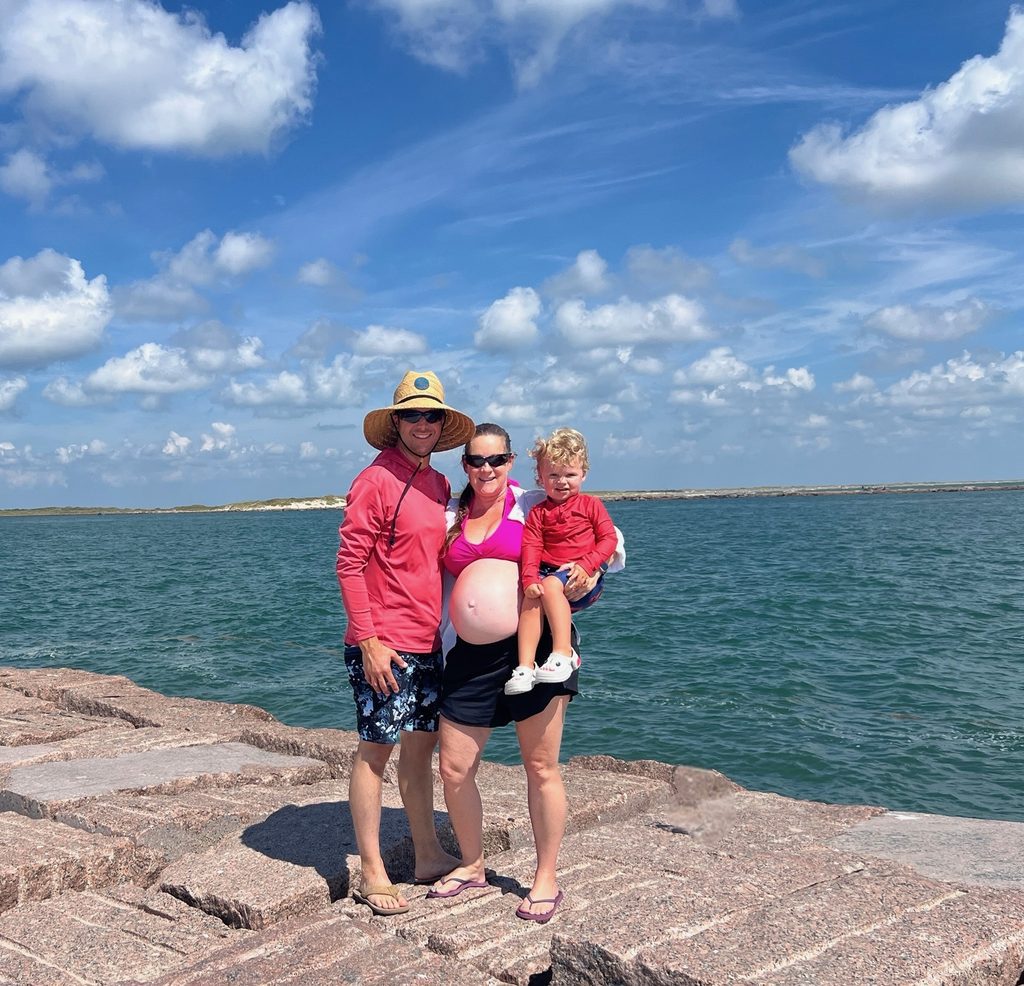
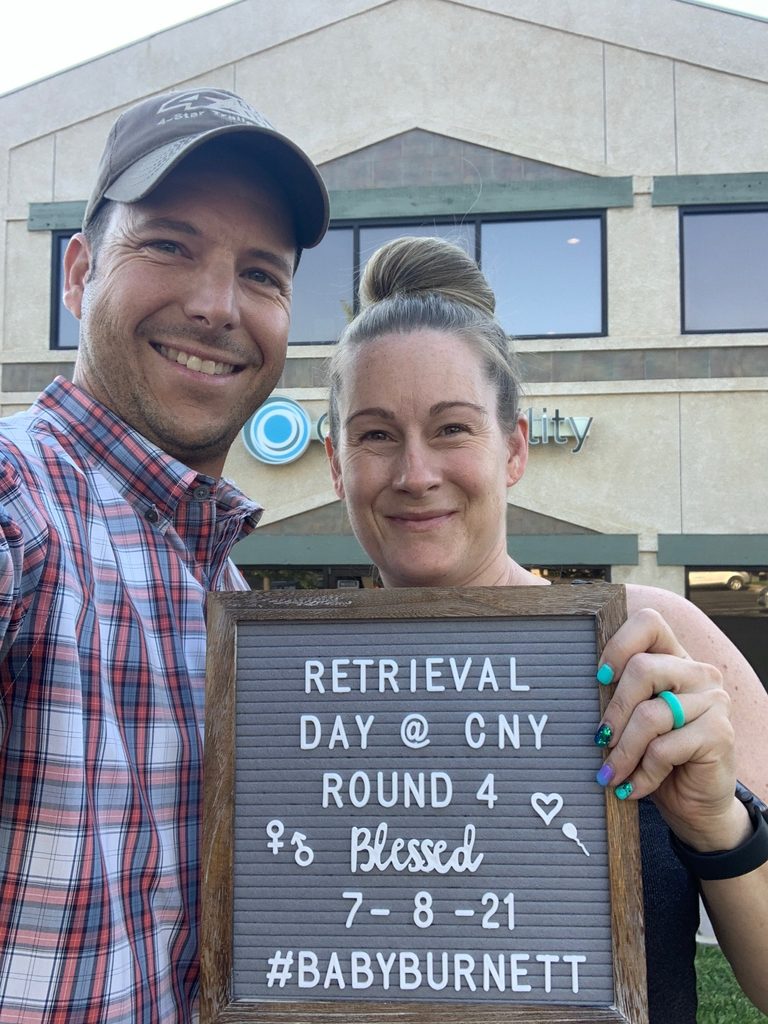
About the Guest
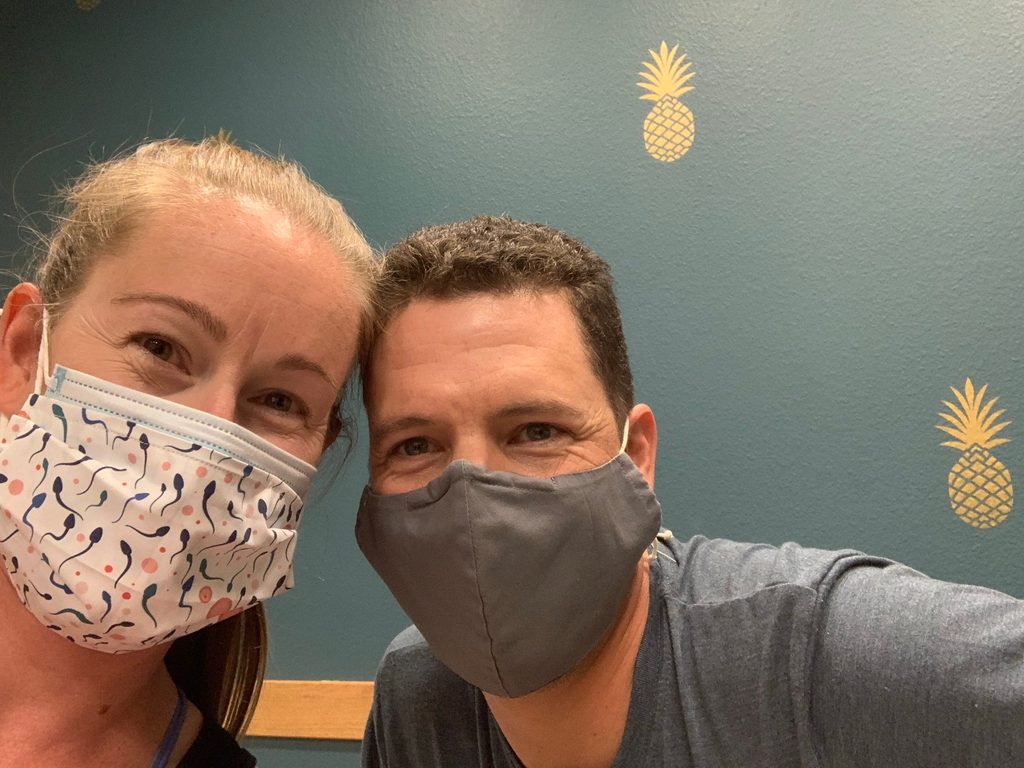
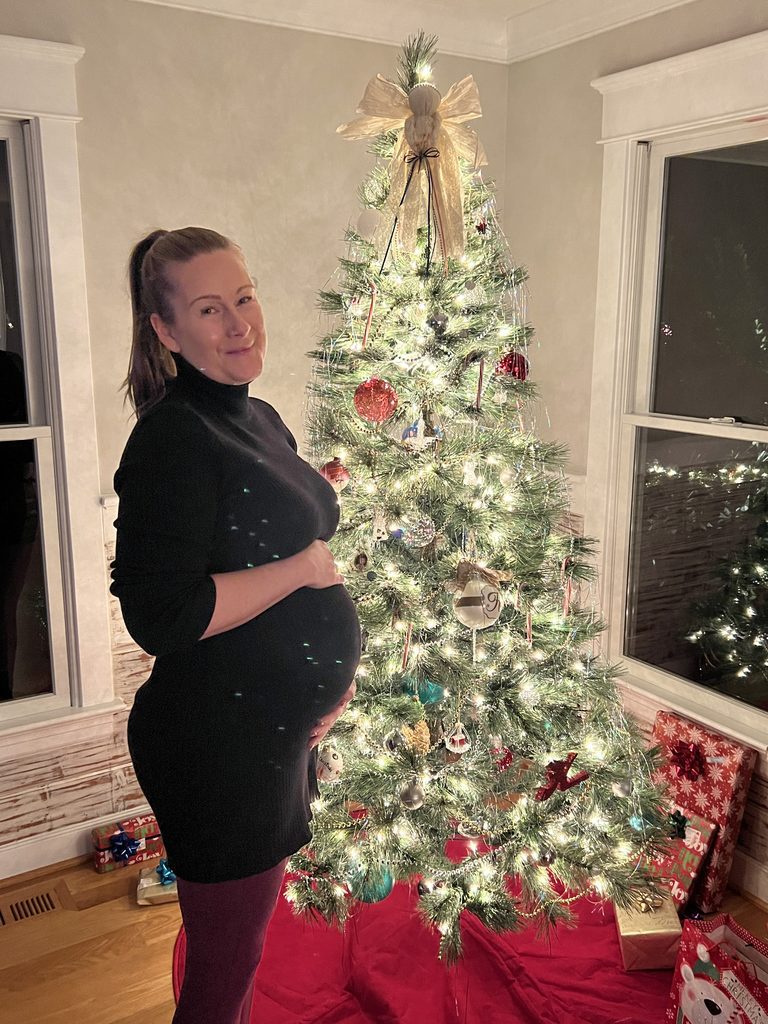
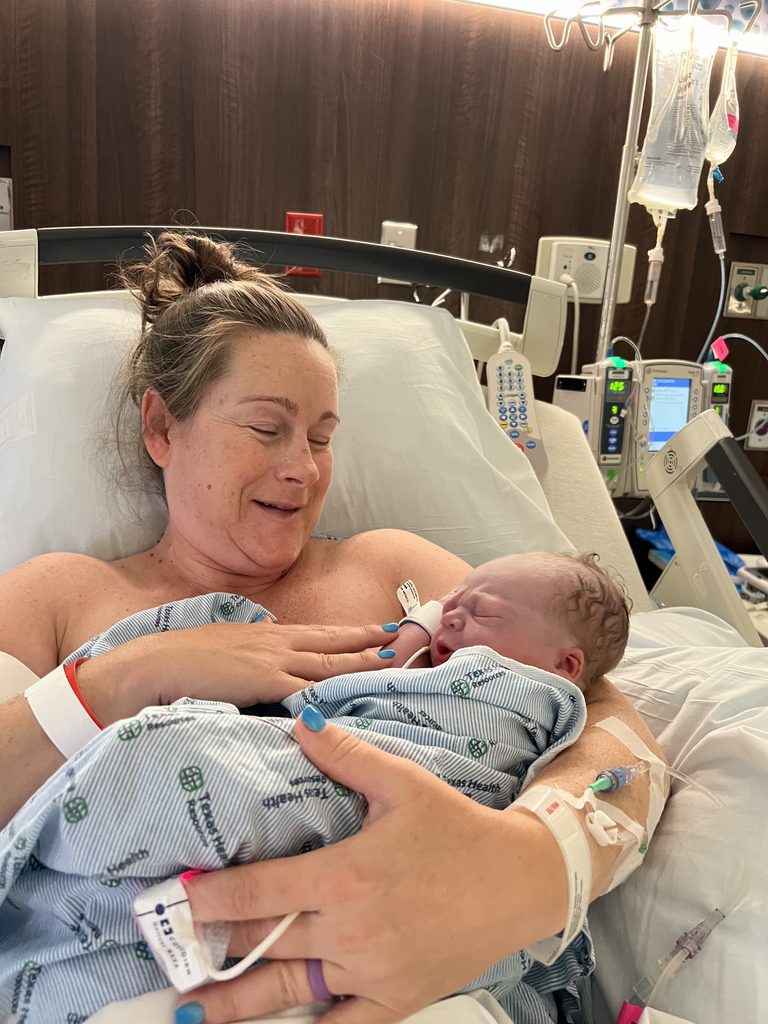
Lisa is a full-time veterinarian, mother, and fertility mentor based near Fort Worth, Texas. After embarking on a grueling five-year fertility journey, navigating silent endometriosis, seven egg retrievals, 11 transfers, and four pregnancy losses, Lisa welcomed her miracle baby boy via donor eggs at age 45. Now expecting her second son at 48, she uses her scientific background and personal experience to empower other women through her fertility mentorship business, Cycle by Cycle IVF.
Connect with Lisa:
- Website: Cycle by Cycle IVF
- Email: lisa@cyclebycycleivf.com
Key Topics
- Navigating Silent Endometriosis & Early Losses: How Lisa discovered hidden endo through diagnostic surgery after experiencing early chemical pregnancies and trisomy 18 losses.
- Overcoming Financial Barriers to IVF: Pivoting from $30,000 private clinic quotes to affordable care at CNY Fertility, and balancing schedule flexibility as an entrepreneur.
- Optimizing Protocols & Supplementation: Adjusting medication doses, incorporating Omnitrope (human growth hormone), back-to-back retrievals, and using It Starts With the Egg protocols.
- Embracing Donor Eggs & Epigenetics: Overcoming the emotional hurdle of transitioning to donor eggs, understanding gene expression as a birth mother, and navigating the donor selection process.
- Managing Pregnancy Anxiety Over 40: Tools for coping with fear of loss, utilizing positive affirmations, and establishing a supportive OB/GYN care team with high-level NICU access.
- Navigating Postpartum & Secondary Infertility: Experiencing birth and lactation as a first-time mom, making lifestyle changes for a second pregnancy, and mentoring others through Cycle by Cycle IVF.
Resources & Links
Note: Some of the links below are affiliate links, which means I may receive a small commission at no extra cost to you if you make a purchase. I only recommend products our guests truly love!
Instagram: Follow Over 40 Fabulous and Pregnant
YouTube: Watch Episodes HERE
Recommended Products: Compression Socks & It Starts With the Egg by Rebecca Fett & Chamomile Tea & Hot Hands & Anti Nausea Wristband
Shop More: See ALL products recommended by our guests!
Support the Podcast: Donate to the Podcast
Community: Join the Over 40 Fabulous Facebook Group
Transcript
Jamie: Lisa, welcome to the show.
Lisa: Thank you so much. I’m excited to be here.
Jamie: We are sharing Lisa’s pregnancy story with donor eggs at 45. She is a very special guest. She is my friend. We met at swim class with our little boys, and it was so magical hearing someone else that actually did donor eggs. Lisa, take us back, when you were younger, did you always want kids?
Lisa: So when I was younger, I would say probably not, because I had a lot of siblings, and I was always stuck babysitting them. So I definitely was like, “I’m never having kids. These kids are crazy.” And probably until I was, like, in my late teens, I was like, “I don’t want kids.
I don’t like babysitting. It’s too much work.” As I got older I did want kids, but I got busy with school and work, and just getting married was just not on my radar for quite a while.
Jamie: You found Steve. How did that happen? And, how was that conversation about with kids?
Lisa: Yep. I met Steve when I was 38, and I had never been married before and neither had he. So it was nice to have met someone after we had started our careers. Then we got married. I was 40. And right away we were like, “Do we want kids?” And he was like, “Yeah, absolutely.” I was like, “Okay, me too.” It was a pretty short conversation, ’cause I think by that time you already know if you want kids- … and you’re just looking for the, the right person to settle down and do it with. He was on board to start trying.
Jamie: So y’all had this conversation after you got married or before?
Lisa: We did talk about it before we got married- Okay … ’cause that was not a deal breaker, but it was, it is something you need to know in your 40s if you’re gonna get married if you wanna start having kids that late. Neither one of us had kids. Neither one of us had been married, so we did talk about it before we got married for sure.
Jamie: Okay. So you got married when you were 40.
Lisa: Yes.
Jamie: When did y’all start trying? And walk us through trying, because this was a not an easy road for you.
Lisa: I did not expect it to be so difficult because I was 40, but yet I still felt like I was in my 20s, so I was like, No big deal. You just do what everybody else does. You have sex and you get pregnant and you have a baby. It’s really simple. It’s not rocket science. We made sure our marriage was good for six months. We were older, we had been together for a couple years, so we kinda knew we were on solid ground.
Then we just started trying naturally, and did all the preconception workup with just a regular OB. He did mention, he’s You’re a little older, so you might wanna get an appointment with a specialist, while you’re trying naturally. So we we got an appointment with a reproductive endocrinologist, which took six months to get that appointment. In the meantime, we’re just trying on our own. So we ended up trying on our own with no help for a year. We did-
Jamie: And y’all were in Colorado …
Lisa: in Colorado. At this-
Jamie: Yeah. Okay.
Lisa: Yep. We did get pregnant once during that time, and it ended with a biochemical. Had no idea what a chemical pregnancy was. Had no idea what a miscarriage was. I’d never been pregnant at all.
I was so excited to see the positive pee stick. Showed Steve. I showed people at work. It had just barely dried, and I was like, Oh.
Jamie: I know.
Lisa: I was so excited. Then a few days later I started bleeding, so I went to the doctor, and it was a chemical. Just an early loss for that one. And that was my real introduction to it’s not that easy, and-
Jamie: Yeah
Lisa: … you don’t just get to have sex and get pregnant and have a baby. And for some reason, that was a shock.
Jamie: Yeah. That’s a huge, it’s a, it was a huge shock for me.
Lisa: Yeah.
Jamie: How far along in your journey were you? Like, how long had you been trying to conceive at this point?
Lisa: That one, probably six months.
Jamie: Okay.
Lisa: I guess we got pregnant pretty quickly, for my age. We came back from the honeymoon, and I had gotten pregnant. I called the reproductive endocrinologist, ’cause I already had the appointment. And she was like don’t cancel your appointment just yet. Just see how this work.” It was seriously the same day. She’s like, Let’s just see how this works out. Keep your appointment, and we can help you.
So good thing I kept the appointments, because it did not work out. So it was about six months into it. We met with their endocrinologist about a full year after trying on our own.
Jamie: Okay. Cause you wanted to do egg retrievals.
Lisa: Yeah, so when I met with the RE in Colorado, it was a private practice, and he said, IVF was your best chance, but it was very cost prohibitive, and he was telling me $30,000 for one cycle of IVF.
I was like who has that kind of money? I don’t have IVF insurance. I don’t have that in savings. That’s insane.” So we asked for the next less expensive step, which was timed intercourse. So we did three or four months of just timed intercourse with medications, doing it that way, so not quite IVF.
Jamie: So you’re talking about Clomid.
Lisa: Clomid, yep.
Jamie: Okay.
Lisa: They monitored the eggs growth. We did Clomid, and I still got a trigger shot to make me ovulate.
Jamie: Oh.
Lisa: And then you’d have sex within a certain timeframe after your trigger shot so that you’d know that you’d ovulated. So we did three cycles of that, and that didn’t work either. We didn’t get pregnant from that. So then we had to decide.
So that was like a whole year of, workups. … I also had endometriosis, so I had some laparoscopic surgeries to get rid of the endo that’s inside.
Jamie: How did you know you had endo?
Lisa: So I didn’t know. It was recommended for the surgeon to go in. The best way to diagnose endo is to actually go into surgery and look for it. And then when you’re there, if you have it, you can treat it at the same time.
So he recommended that. So it was called silent endo ’cause it didn’t really have all of the classical signs of it. It was laparoscopic, so he showed me all the spots that the endo was growing on the outside of my uterus and on my tubes and my ovaries, and he used laser and cut them all out then.
That’s supposed to increase your risk because endo’s just inflammation. So the whole goal is to get inflammation out of your life and out of your body to help get pregnant. So I end up, over this whole journey, I’ve had three surgeries for endo because I was like, “Is it, does it keep coming back? What’s happening?”
It had come back a couple years later. I was desperate. I was like, Whatever it takes.
Jamie: Sure.
Lisa: … If I need another surgery, at least insurance would cover that one. Go in there, clean it out, do whatever you can. So that was a full year of workups and diagnostic tests and the timed intercourse cycles before we Gave up on that.
I think we actually had one more natural pregnancy during that year. That one made it to six weeks. Didn’t start off very strong, so it was like we were hesitant, and that one ended in a miscarriage, and we had a D&C for that, and that was trisomy 18.
Jamie: Okay.
Lisa: Which again was my new introduction to chromosome abnormalities at this age. I was like, “What does that mean?” So I had a consult with a geneticist, and they explained everything, and that the odds of chromosome abnormalities at this age were a lot higher.
Jamie: You remember how old you were when that happened?
Lisa: I did, I wrote that one down. I had to have been 42.
Jamie: Okay. No- have you done any egg retrievals by this point yet?
Lisa: Nope, no egg retrievals at that point.
Jamie: Okay.
Lisa: So this was all before we technically started IVF.
Jamie: And you said it wasn’t very strong. You mean your HCG level was low?
Lisa: Yep, it was low.
Jamie: Okay.
Lisa: And then when they were measuring the sac was always smaller than it should- have been for when we were there. We never got to the heartbeat on that one. We just measured the sac, and if I’d go in at five weeks, the sac was measuring four weeks. Then I went back in at six weeks, the sac was measuring five weeks. And it just wasn’t growing, and we never got to a, a heart rate.
And then my HCG started really low, like in the 30s.
Jamie: Yeah.
Lisa: And then just never really took off like it should.
Jamie: Because you had a D&C and you got the embryo tested, do you think that helped give you closure? Because your first loss, I don’t think you got tested.
Lisa: The first loss, basically I got pregnant and then I lost it within three days, so there was nothing to test. But the second one, there was fetal tissue. It did help me with closure to, to let me know it wasn’t anything that I did, that I ate, or that I drank, or that I didn’t do, or that, that one time when I accidentally punched my stomach or hit my stomach on something.
Because that thought still comes to me. Oh, I went on vacation and I flew in an airplane. Maybe that’s what it was. But having the pathology report tell me it was, trisomy 18, which is not viable. So it does help give me closure. Even today when I think back to it, I’m like, “Nope, it’s nothing I did.”
Jamie: Yeah.
Lisa: So it does help for me.
Jamie: Good. And did they tell you the sex? Because I almost wish- I didn’t know.
Lisa: Yeah, they did.
Jamie: Okay
Lisa: … they asked me if I wanted to know, and I did. That’s just another part of knowing what to grieve.
Jamie: Yeah.
Lisa: We had rocks outside of our bed, like a little rock bed with our plants. So we painted on the back of a rock, we painted the date and painted it in pink ’cause it was a little girl. So we painted the date, and we just kept it in our little rock bed.
Jamie: That’s a nice memorial.
Lisa: Yeah, just something, a little something. It’s not in our face every day, but it’s something that I know is there.
Jamie: Did you need time to grieve before moving on to the next step?
Lisa: I did, yeah. I basically needed time to do research. What happened? I obviously have been pregnant, twice, but I’m not keeping them. That’s when I started delving into the world of infertility and that, 42 is not the ripe old age to be getting pregnant.
Because I never felt like I was ever in my 40s, it was just… It just came as such a shock still. I’m like, I feel like I’m 20. How come it’s not that easy? And then just reading all the changes that the ovary goes through and the eggs go through as you age.
So I did a lot of that, and then considered, IVF. And it’s where are we gonna get the money for that? That’s our best chance. How much is it really worth, to spend all of our savings for one time, for one maybe hopeful, baby, one egg?
We had to talk a lot about how far do we actually wanna go- and how much money do we actually wanna spend, and how much do we really wanna put into this. Because he also told me, he’s like, If we never get pregnant, I’m fine with that. So he was very supportive.
Jamie: So was your end a dollar number? Or was it like, “We’re gonna have a baby,” is our end?
Lisa: No, it was probably financially motivated-
Jamie: Okay
Lisa: … because he was talking 30 grand for one cycle. And back then I didn’t know what one cycle was. He said, it might take more than that. The medications are expensive, the actual cycles are expensive, and the time involved in doing this is astronomical.
I actually quit my job. I was a full-time veterinarian. I worked mixed animal practice in Wyoming, so I commuted to work, and during my fertile window if I was on call and we can’t have sex during my fertile window, so there goes this month. So I quit my job so that I could have time- … to be with my husband when I needed to be, and then to start doing the treatments that I would need to do, ’cause it is so time-consuming.
Jamie: Yeah, it is.
Lisa: So I opened my own business so that I could be a little more flexible with that. And in turn that gave us a little bit more financial flexibility, too. I know it sounds weird quitting my job, but my new business was very successful and very flexible in my schedule. That helped.
Jamie: Where did you go from there after y’all decided … What did y’all decide? I guess to go to IVF.
Lisa: It was actually not feasible for a while until we found out that CNY, which is a fertility clinic based out of New York they had opened a branch in Colorado Springs. So that was only like three hours away from where we lived. So that had been recommended on a few of my infertility Facebook pages, support pages.
So I started looking into that, and they had just opened the branch in Colorado, and they’re known for high volume but more affordable IVF treatments. So one cycle for them was maybe like 6 or 7,000, not 30. … Huge difference.
Jamie: It’s really cheap. Yeah.
Lisa: Yes. It’s very cheap. And the medications are still expensive- … but they give you ways to get around that. I was 42, turning 43 when we started with CNY.
It was only because of them that we actually went forward with IVF. When I looked at the money and the time that we could do it, if it wasn’t for CNY being in Colorado, I don’t know that we would have made it to have a baby, i’m very thankful that they opened that branch, and that I found out about it.
You had to get a consult and talk to a doctor, and get your foot in the door, and then started all over with the preconception testing, and just started making drives to Colorado Springs. So we started that when I was 43.
Jamie: Okay. And how many egg retrievals did you go through?
Lisa: The first year, I did four egg retrievals, and it was,
Jamie: In one year!
Lisa: Back to back. In one year. I think that was about as many as you could do. It was like the first three were full price, and the fourth one was half price or something. So by the time you did the third one, I was like-
Jamie: We might as well…
Lisa: i’m going for it. So that’s how we ended up with the fourth one. I convinced my husband. I was like, It’s half price now. And I already know what to do. And at that time when we spoke to the doctor, he did recommend PGT testing the embryos, so testing, genetically testing the embryos then. So we did four egg retrievals that year. We collected 40 eggs from me.
Jamie: That’s amazing.
Lisa: I know. Each time the first time it was four eggs, and the second time it was six eggs, and then we made changes to the protocol each time. Then it was, like, 14 eggs, and then it was 16 eggs I think- was the last one. But each time, since he did recommend testing them, you have to grow them to a certain stage, which would be the blastocyst stage a day five, day six, where you lose a lot of embryos from the eggs you collect to what ends up as a blast. So of the 40 eggs, only six made it to the blast stage-
Jamie: Wow
Lisa: which is part of my age. So we sent those six off for testing. Each time, each cycle we sent some off. And of those six, we ended up with two PGT genetically normal embryos.
Jamie: Okay …
Lisa: at the end of the four retrievals.
Jamie: Now, we have a lot of women, I can already hear them right now, saying” lisa, will you tell us some of your protocol changes from each cycle?”
Lisa: Yes. A lot of it was adjusting How much medication, like how much of the Menopur or the Gonal, each hormone. I think the biggest one that helped was adding Omnitrope.
Jamie: Okay
Lisa: … Omnitrope is human growth hormone, and you just do little tiny amounts every day for 30 days before your retrieval. And I think that was the biggest jump going from six eggs to 14 eggs, was adding that in there.
Jamie: Wow. That sounds risky to me.
Lisa: It’s such a tiny amount that-
Jamie: Okay
Lisa: … a lot of IVF clinics use it.
Jamie: Oh.
Lisa: It’s just supposed to give the eggs a little boost. Now, I had also changed lifestyle stuff got rid of… I changed my shampoo. I changed my laundry detergent, got rid of the phthalates and all the things that you’re not supposed to have, BPA, you know. It’s made some basic lifestyle changes.
Supplements were a big one. There’s a book called It Starts With the Egg. I think you guys have probably- Yeah know about that one. I read that, highlighted it and marked it up, tabbed it went through that. She has some good protocols in there for IVF. So I went through that. I started on supplements to help with egg quality. But then I think adding the Omnitrope really gave that extra boost. Plus, I did each retrieval back to back, so my body was already Primed. I did those retrievals in March, April, June, and July, so basically one a month.
And my body was already in the mode of making eggs. And so that’s why we did it back to back, was to follow up with what the hormones were already in my system.
Jamie: How did your body react to the drugs?
Lisa: Fine. I think they were fine. My husband might think differently.
Jamie: No weight gain or hormones out of whack?
Lisa: Definitely weight gain. Okay … so we did IVF for three years, and I gained 20 pounds through the whole, through that whole process. Just slowly and gradually. Definitely gained 20 pounds. Stress and then the hormones.
But as far as like emotionally, I did good I think, and I didn’t have any crazy outbursts. And my husband is very understanding, and if I did snap at him, I could say, Oh that’s the hormones talking. Don’t worry about that. Move along. So he was really patient with that. But I didn’t really have any what I would consider adverse reactions to it. And-
Jamie: Okay now you were ready to do these transfers I bet.
Lisa: Yep. So we did the four retrievals. We have our two genetic normal embryos, and we transferred them, and I was little over 43 when I did my first transfer of the first normal, PGT normal embryo. That did not work. And then two months later, I did the second one, and it also did not work.
Jamie: So didn’t even get pregnant?
Lisa: Nope, didn’t get pregnant, nothing. Nothing. So another slap in the face of reality. ‘Cause I was like, “Oh, great. I have normal embryos genetically. Just put them in there, and then I’ll have a baby.” That’s also not how it works. And again, it was another what? Are you serious? I did everything right. I have normal embryos. Both of those were what was considered a fully medicated transfer cycle which means all the hormones are controlled outside of the body, so lots of progesterone injections instead of using your body for anything. Everything’s controlled externally.
Those two didn’t work. And so that was the end of 2021, so then we had to decide in 2022 what to do. We’d done our four that my husband allowed me to do, and but by then I was like I’m an expert at this, so we’re gonna keep going.” I’m just gonna keep going. I can afford it, and basically the income from my business was paying for all this IVF. We could pay our mortgage and our bills off of my husband’s income. So my income was basically all just kinda going to IVF and use-
Jamie: Was that like a motivation for you?
Lisa: It kinda was, yeah. It was, and I, my work was very flexible, and I owned my own business, so I could make my own schedule. But it was very helpful that income was there, we didn’t- need it. It was very helpful, but if we were gonna continue to do this, it basically supported that whole journey. And gave me the time to do it, which is, having an actual full-time, go to the hospital and work kind of job wouldn’t have given me the time to commit to IVF.
Jamie: Sure.
Lisa: Especially with the clinic being three hours away. Any time I’d wanna go to the clinic.
Jamie: Yeah.
Lisa: So monitoring appointments were, 8:00 in the morning. So I’d get up, I’d leave at 5:00, drive down there, get my 20-minute appointment, go get some Panera, and then drive three hours back home, and then I could work in the afternoons. So- … I had some very long days.
Jamie: Wow.
Lisa: For quite a few years.
Jamie: Yeah. So where do you go now? You’ve had your transfers. You don’t have any embryos left.
Lisa: Yep. Were nothing left, so we, my husband agreed that we could just keep going. He’s like- Yeah … “As long as, you’re physically and mentally okay to do it,” we started again in 2022. So that would be 44 years, turning 45 during that year, and we did three egg retrievals in 2022. All of those were when I was 44.
There was a accident at the lab. So on egg retrieval number five, I got five eggs. So you can see how I dropped from 16 eggs down to five after taking a big break there and doing transfers.
Jamie: Yeah.
Lisa: And my hormones got leveled out again. I probably slacked off too on all the supplements because a year after taking giant pills every day, I was like, “Ugh, I can’t stomach this anymore.” Probably slacked off on some supplements. So I got five eggs on that retrieval, and there was an accident at the embryology lab, and four of the eggs were lost. They were dropped. So I was devastated because ’cause I’m 44. I don’t have time to be dropping four eggs on the floor.
Jamie: How did they compensate you for that?
Lisa: Yes. The owner of the clinic called, and he was very, apologetic. He’s like, Humans make mistakes obviously. He’s a wonderful man, and he said, I wanna help you. I’m gonna give you two more retrievals at no charge. So we got two retrievals at no charge to try to get a couple more eggs from me. So I took that. So that’s how we ended up doing two more. So in that year, we did the one, and I was just gonna call it quits, and then we did the two more. So that made it total of seven retrievals over the course of two years.
Jamie: That’s wild.
Lisa: Yep. So those three that I did when I was 44 to 45, we got 21 eggs through those three.
Jamie: Wow.
Lisa: The changes I made was I did not PGT test any of those. I didn’t push any of those to the blastocyst stage. I kept those all at day three. So anybody that made it to day three, we froze them or transferred them. So I did actually do a few fresh transfers during that timeframe. We ended up transferring a total of 10 embryos that year of my own eggs. So 10 embryos that were made with my eggs we transferred.
Jamie: Wow.
Lisa: When I was 44.
Jamie: Seven egg retrievals, and that’s- … 12 transfers.
Lisa: At this point, yes. I think we had- We were at 12, yeah.
Jamie: Wow. So did you get pregnant on any of those transfers?
Lisa: One of the fresh transfers we did get pregnant, and that one made it to about eight weeks. Again, the first hCG was in the 50s, but they consider anything over, 25 pregnant. They try to give you hope, but it’s, looking back, that was a pretty low number. But then you’re, like, scouring the internet, does anybody have a beta that was low that had successful pregnancy? And there are cases of it I was giving myself hope. “Oh, okay. This person had one that started at 12, and she made a baby, and so we’re good to go.”
So I spent most of my time looking for positive stories with low starting numbers. But same thing, it just didn’t measure the same as what it should have been. In doing IVF, we know exactly how old the fetus should have been, so we were always a week behind every time we measured. We did get to six weeks. We saw a heartbeat. A little slower than what would be expected for six weeks. Came back at seven weeks. Same thing. My betas were increasing. They were going up and everything was looking good, just the fetus wasn’t growing the way it should have been. And then we went back at eight weeks, and the heart rate had started dropping off and wasn’t keeping up, and we were still measuring a week behind, and my betas had leveled out. They weren’t really increasing anymore.
So we made the decision at eight weeks to just go ahead and stop. The heart rate was basically 20, so it was like-
Jamie: Yeah …
Lisa: barely even there. So we had another D&C after that one. And we did send that one off to pathology, and it was another girl, and that one found no abnormalities.
But they told me, they’re testing a teeny, tiny pinch, of the tissue, so The biopsy might have missed something, or it might have been a normal fetus and there’s something else that went wrong, ’cause it’s not always genetic.
Jamie: Yeah.
Lisa: So that was the fourth miscarriage actually. And there’s some other time in one of those other transfers there was another chemical pregnancy where I got pregnant, I saw it on the pee stick. And then by the time the blood testing came around, it was negative,
Jamie: okay.
Lisa: So this one was technically the fourth miscarriage, but the second D&C.
Jamie: So at this point, how are you feeling? Are you do you have hope? Are you just lost? Like- how are you feeling right now in your journey?
Lisa: I had zero hope.
Jamie: Yeah.
Lisa: I was like, this is dumb. Like, how hard is this? You get an egg, you make an embryo. I don’t understand. So we did. I did start losing hope. I tried to focus on the research and the things that I could do to change me for better.
So making sure I had the right supplements, making sure we were eating better, and eating quality foods, and just whatever I could do for the next cycle. Is there anything else I can add? Any more medications? Make sure I’m doing the Omnitrope. There were a couple other over-the-counter supplements that you can take for egg health.
After retrieval number seven, we did the donor egg add-on. We did that one on retrieval number six. That just meant we purchased six frozen donor eggs. That’s tricky, ’cause the eggs are frozen, and an egg is a single cell. So when you freeze a single cell and then thaw it, you risk losing it, ’cause it’s not as stable. Whereas an embryo- … is, eight or more cells.
Jamie: Yeah.
Lisa: So it’s a little more stable when you-
Jamie: Yeah freeze and thaw. So we bought six frozen, and we were very lucky that all six survived the thaw.
Lisa: And since it was added on to my retrieval, it was a little less expensive. So that just means I went in for my retrieval, my husband went in and did his part, and so they thawed the eggs at the same time.
Jamie: Oh.
Lisa: And so they can inseminate everything. Okay. So they inseminated my eggs and the donor eggs- … all together with-
Jamie: Okay. How did you come to the conclusion of going to donor eggs?
Lisa: My husband and I had a talk about it a lot. Again, how far are we willing to go? Do we want to adopt a baby? How far are we willing to go to have a family? So the options were donor egg, ’cause his part we had done semen analysis and everything was good. So it was the eggs. So the first logical step would be donor egg, then there was donor embryo, and then there’s adoption.
My husband wasn’t super comfortable with the idea of adopting a baby. That comes with a huge expense as well. Adoption’s not As easy as everyone’s like, Oh, just, why don’t you just go adopt? It’s not like adopting a puppy. It’s a whole thing.
Jamie: Yeah.
Lisa: Very time-consuming and a lot more money involved in that, and we weren’t quite ready for that. So we decided that donor egg would be acceptable. We looked into epigenetics, which is the transfer of, my DNA and my blood. Having that embryo in my body. I’m growing it, I’m nourishing it, I’m providing for it.
My body and my uterus is responsible for turning on and off genes in that embryo. That’s what epigenetics is, and I looked into that a lot, and that made me feel better that I still had some input into the embryo and into the baby. And also, it’s half my husband, so that’s perfect.
Yeah. So we agreed on that, and then that’s a whole journey. The donor egg journey is a whole story. You’re just looking at pictures- … of girls, and it’s weird ’cause I show my husband pictures of girls. I’m like, “What do you think of this one?”
Yeah. “You think she’s pretty?” And then you get wrapped up like, “Oh, she doesn’t look like me,” or, “She doesn’t… Her hair color’s different.” Then you have to think, “That’s not what I’m going for. I’m not going for me. I’m going for a healthy person with healthy eggs and a healthy history, family history.”
So they have their family history listed, pictures of them as babies and as adults and, that’s obviously the first thing you look at. Try to get someone similar looking to me.
Jamie: Did you go with an egg bank or did you go with the fertility clinic’s frozen eggs?
Lisa: I went with the fertility clinic. So CNY has their own donors. Yeah. Which again, less expensive- … than an egg bank. I did look at outside egg banks. Couldn’t afford that.
Jamie: Yeah.
Lisa: CNY already had their donors. On that note though, their donors are s- it’s slim pickings sometimes- … because, it’s just them. You don’t have access to hundreds and hundreds of thousands of women doing that. And they had the frozen eggs are from when a donor donates through a fresh cycle, and then all her fresh eggs are given away to recipients, and then she has extra, so they freeze them, and they just put them in a bank.
They sell them in lots of six. So we found one that had six left, and she was similar looking to me. We looked at height and weight and build, and then what they like to do, their education, their parents, their health, any problems in their health, any problems in their family health, and picked her six eggs and got those.
Jamie: Did you come to the doctor with the idea of doing donor eggs, or did the doctor suggest it?
Lisa: They had been suggesting it.
Jamie: Okay
Lisa: They had been bringing up the idea of donor eggs because of my age and the results that we had. We’d had two normal embryos, and they didn’t work something else must be going on. So they did bring it up, so I’d had time to think about it already when we did the add-on package.
Jamie: Okay, fast-forward. We went back a little bit for one.
Lisa: So we got the donor eggs. Yeah. Six, six frozen, six of them thawed, six of them fertilized.
Jamie: What?
Lisa: Amazing results there.
Jamie: Yeah.
Lisa: I was like, “That’s unheard of,” ’cause you usually lose some along the way.
Jamie: Yeah.
Lisa: So those we did push all the way to the day five blast stage. Because they were from a younger girl, they should be a little bit stronger. We lost three, which is the average. You typically lose about 50% each step the, of the way. We made three blast. They were all day fives, and they were graded very well. Those were our three last little hopes.
Jamie: So now you’re going into transfer number 13. How are you feeling about it at this point?
Lisa: So when I started, so my first donor egg one is actually transfer number nine. Oh. I wrote down all my transfers, ’cause I know, I got- Okay … very confused too.
Jamie: Okay.
Lisa: I had to write them all down multiple times. So the first donor egg transfer was number nine, ’cause some of my own egg transfers, I transferred two embryos or three embryos-
Jamie: Okay
Lisa: or multiple embryos at a time.
Jamie: Okay.
Lisa: So the first donor egg transfer was number nine, and I was feeling hopeful. I was like, “This is the answer. This is obviously the answer. This is perfect.” Nope, didn’t work. And that one I was 45. So I was 45 when we started in on the donor eggs.
Jamie: Okay.
Lisa: And the first one didn’t work. And then I was like, “Okay, that’s no problem. The second one’s definitely gonna work, obviously, because why wouldn’t it? It’s from a young girl.”
So we do the second one the next month. We did them month to month, back to s- back to back. Second one didn’t work. So then I was over it. So then when I was over it I was like, This is not gonna work. I don’t know what to do. I had already decided for myself that I was gonna start all over with a new donor and do fresh, ’cause maybe it was ’cause the eggs were frozen, they weren’t as good. I’d already had another surgery for endo, at some point in time during all of this, and then I was like let me start suppression.
So that’s what you can do to suppress your endo. So you basically use medications to put your body in menopause, and that decreases the inflammation of the endo. So you do that for three months. This medication’s probably five grand a month.
Jamie: Ugh. So- is this lupron?
Lisa: Yeah, Lupron.
Jamie: Okay. I had no idea it was that expensive.
Lisa: Yes, some of the… And insurance isn’t gonna cover it, ’cause they’re like, “There’s nothing wrong with you.”
Jamie: Of course not. Yeah.
Lisa: So CNY does have its own little internal, they used to have, they don’t have it anymore garage sale group where you could sell medications. Probably not, legal, but everybody does it. Because you buy all these medications and then you don’t need them anymore.
Jamie: Yeah.
Lisa: I have a ton of IVF meds here that I don’t need anymore. And I hate for them to go to waste. So you can donate them, you can sell them, you can give them away. So I did buy I did another consult with a doctor, and he was like, “Yep, we can do suppression for three months with injectables, and then just start all over.”
I still had that one donor egg embryo left, but I was done. I was like, “It’s not gonna work, so I’m gonna go onto my next plan,” which would be the suppression. So I got my first dose. I’m like let me just get rid of this embryo, this last embryo. Let me just put it in and get rid of it so that it’s not there,” that was literally my frame of thought. It was just like- Like,
Jamie: yeah …
Lisa: put it in so it can fail.
Jamie: You don’t wanna waste it.
Lisa: Yeah. I just wanna move on. Don’t throw it away, but we’ll do the transfer, we’ll let it not work, and then I can move on to suppression. So when I went in for that transfer, I had been doing all these add-ons intralipids and- HCG wash, where they can do a uterine wash for you. Nepagen, which is immunosuppressants. I’d done all these different things this, this whole time. Acupuncture before and after transfers. I’ve tried it all.
So I went into this one and was like, “Nope, I’m not gonna do acupuncture. I’ll do the HCG wash because I have the medication,” because you trigger and you use that same medication to go into your uterus. I was like, “It’s only $50. I already have the medication. Why not? So I’ll do that one.” I did just some really cheap stuff, like some antibiotics beforehand, and I already had Lovenox- which is the blood thinner, so I already had it. So I was like, “Okay, I’ll do it, but I’m not doing anything crazy. I’m not doing acupuncture. I’m not doing Nepagen. I’m not doing infusions.” I was like, “I’m just gonna go in, put the embryo in.” So it was very blah. Like, when I went in I wasn’t excited.
I think we took pictures because there’s always that little piece of you that’s “Okay, it’s gonna work, so- … I’d hate to not have, all the stuff.” In the beginning, I had pictures of everything, and videos, and pictures of me and the doctors and everything. After, 11 times, you just kinda show up. So that’s how I did for that last embryo, is just showed up. They did the transfer and I was like, “Okay, I’ll just go and wait for this to not work so that I can continue on with my life and the next step.”
I am a serial pee tester. So some people won’t, test. They wait all the way to beta day until they get their blood work. Not me. I’m peeing on the stick like two days later because, for scientific reasons, I like to see when the trigger left my body. So when you trigger with HCG, and that’s what comes up on your pregnancy test is HCG. If you trigger, it’s, you’re gonna be, it’s gonna be positive. So I would pee on the stick every day, sometimes twice a day, because I’m a little crazy, and I could watch it fade.
So I’m like, “Okay, so the trigger is fading out of my body.” And I’ve done that for multiple cycles, so I kinda knew at which day the, the line would disappear completely. So this time, the line’s getting lighter and lighter, but it doesn’t go away, and then it kinda gets darker and darker.
And I was like, “Oh, okay, so this is probably real.” And by the day before beta, when you still have a positive pee stick, it’s real. It’s not my trigger anymore. So I was like, “Oh, okay, it’s a real positive pregnancy test. That’s cool. So when am I gonna lose it?” That’s the next thought in my head was-
Jamie: Yeah
Lisa: “Is it real? Is it gonna be, like, 30 again?” Because 30 will give you a positive pee stick. IVF and miscarriages and loss just like steals the joy from you. It just takes all of the happiness away, ’cause I couldn’t be, I couldn’t even be happy.
Jamie: Yeah.
Lisa: Here it is. So we’ll see. So I went in for my first blood work, and it was 194.
Jamie: Wow.
Lisa: So that’s my first hint of, oh, maybe this one will actually work. That’s the highest, beta starting that I’ve ever had, and it was a donor egg embryo. And I didn’t really care if it worked or not because I was already onto the next step. So you had that little hope.
But then always in the back of my mind, I was like, “Well- … you’re gonna lose it anyway, so don’t get too attached.” And then the next beta was, like, in the 500s, and I was like, “Oh, it’s more than doubling. We’re doing great,” but still I’m just waiting for the other shoe to drop.
It just made it very anticlimactic, the whole process, normally you get that positive pee stick, and you’re, like, so excited. But for me and for people that have been through loss, it’s… it can’t be exciting because you’re always waiting for something bad to happen. I think, at the five-week ultrasound when the sac measured five weeks and I was five weeks, that was another positive sign that we were on the right track.
And then at six weeks it was measuring six weeks instead of a week behind, and we saw a heartbeat. That’s probably when I was, like, the most excited. This is actually gonna work out. This is really cool. So that’s when I could get a little more excited. Very guarded, but still, excited because there was…
there’s still a lot to go after six weeks. And then I’m reading the statistics of the chance of loss. Every week it goes down, but there’s still that chance, and so you get lost. You can go down the rabbit hole sometimes with-
Jamie: Oh, yeah
Lisa: … with that.
Jamie: Yeah, and you’re just not used to having good news.
Lisa: News, no. I’m used to… i’ve had four other times where I’ve had a positive pregnancy test that did not turn out well, so- … I just kept waiting and waiting for something bad, and thankfully we were very blessed for that last one. And-
Jamie: And this is number 12.
Lisa: So this was transfer number 11. It was the 19th embryo that we transferred.
Jamie: Oh my gosh.
Lisa: The 11th transfer. And that was it. He was the last donor egg embryo. He was the last chance. We were out, out of embryos.
Jamie: Yeah. Tell us how was your pregnancy with your baby?
Lisa: My pregnancy was amazing. After, after all of that, God probably said, “Okay, you deserve a nice pregnancy.” So I said, “Thank you” because it was, it really was great. I did have a lot of nausea in that first trimester. So with IVF you start, ultrasounds at five weeks. And most OBs won’t see you until eight or 10 weeks, but my OB had actually been involved in some of my monitoring appointments, so they knew what I was doing.
So they were invested in me, and I asked for a six-week doctor’s appointment because I was freaking out. I was like, “Tell me how not to lose this pregnancy. Also, I can’t keep anything down.” So my OB was very supportive. He knew I was of age and had no problems with it and helped me with anti-nausea medication, and I’m very, what are the side effects? What are the side effects to the baby? And the studies say that this can cause this, and he was very very supportive and very… explained a lot of it to me. So I did take Zofran when I was… had bad days. And he s- just, the studies that say Zofran’s bad for the baby, the studies are published by Zofran’s competition.
So make sure you read everything. Who did the study? How was it done? When it was paid for by the competing medication- … it’s so there’s some bias there.
Jamie: Okay. Sure.
Lisa: So I felt comfortable taking that as needed when couldn’t keep anything down. So yes, I was nauseous the first trimester, and he told me, the first three months you’re nauseous, and then the second trimester is your honeymoon where everything’s just great, and then the third trimester things go back downhill ’cause you’re so big and swollen and everything like that.
He was exactly right. It was basically, it followed that exact schedule.
Jamie: Did you find out the sex during pregnancy?
Lisa: We did. So we did the NIPT testing at 10 weeks. I considered myself high risk just because of my age, but because it was a donor egg embryo, it wasn’t as high risk because the risk at my age is the chromosome abnormalities, which are decreased with using a donor egg.
We did NIPT anyways because insurance covered it, too. So we found out the sex during that one, and I did wanna know. Again, I peed on the stick from the day after the transfer, so I’m somebody that has to know. So- … we did find out early.
Jamie: Will you tell us the story of finding out? ‘Cause you probably got that through an email.
Lisa: I did. It was also very anticlimactic. I bet it was. So I opened the lab results, and I did close my eyes before I read it just to give myself, I just, I did it by myself just to give myself some surprise. And then I, processed it, and it was it was a boy, and I was like, “Oh.”
So I thought about all the ways of being a boy mom, and then I was like, “How should I tell my-” my husband, and I really wanted to tell him that day. So I went to all these stores to look for some gender reveal poppers or stuff like that. I probably went to three stores that day. It was, like, on a Sunday, and nobody had any.
So I ended up driving all around town to Party City, I think, and got the Silly String. So I went and finally got blue Silly String ’cause it’s all I could find. But I really wanted to tell him that same day instead of ordering it from Amazon or something. So I came home and gave him the little jar of Silly String. We went outside and pshew. So that’s how he found out.
Jamie: Was there anything that helped you through pregnancy that you could recommend?
Lisa: Compression socks were amazing. Definitely. I flew on a plane during pregnancy, and that’s when the OB had recommended compression socks. Those made a huge difference.
That was very helpful. Yeah. And then the eating, being very careful, making sure you have the saltines. I did the morning sickness lozenges. All the normal things. I did the ginger. I tried ginger tea. I got so desperate I was taking, like, shots of ginger. I was, like, trying not to be nauseous, ’cause I was trying not to take medication.
So I was taking these nasty shots of straight ginger, which I could not stand that either. But I tried all the things, acupuncture sea sickness wristbands- … where you could put the acupuncture on your, pressure on your wrist. So those helped when it was, like, mild. But I think just staying active was really big- not just sitting on the couch.
I’d got sick twice during my pregnancy. I got flu once, and I got either COVID or RSV the second time. I had both upper respiratory things during my pregnancy, and I’m the kind of person if I get a tickle in my throat, I know something’s wrong. And when I was pregnant, as soon as I got a tickle, I’d go to urgent care, and it’s like, “Test me for all the things,” ’cause we’re still in the COVID era then. We did that transfer end of September, so we were in flu season when I was in my first trimester.
If you get diagnosed with the flu early enough, they can start, treatment for it. And then I was like, “Oh, is that safe? Is that safe for the baby?” So now I’m like don’t give me any medication yet. Let me go look it up. Let me ask my OB. Let me, look into it.” But I did decide that treating for the flu and getting it over quicker would be better for everybody instead of suffering through it for weeks and weeks. Fever, is not your friend during that first trimester. Yeah, so I had flu, and then COVID. Yeah. And then we moved. Then we moved to Texas while I was pregnant.
Jamie: How far along were you?
Lisa: Six months.
Jamie: Oh, my goodness.
Lisa: We packed up our house when I was about five months. But so that was in the second trimester when everything’s going great, and I feel good, and I have energy. I packed up about half my house, and then the movers came. And I was like, “I’m sorry, I couldn’t do any more,” so they finished. And we did have a company come and move, so that was very nice.
Jamie: Yeah.
Lisa: My husband spent the entire month of February driving back and forth between Colorado and Texas moving our big stuff. We have horses, so he had to move the horses down there. So I’m just home packing boxes and moving around and staying active, and I think that really helped.
The only time I was down was when I had the flu or whatever respiratory, and I would take it easy and sit on the couch. And staying hydrated was so important, and I’m not very good at drinking water, but that’s a big one. Just whatever you can do to get fluids in you, and I’m just, I’m not good at that.
But that was very helpful. The flavored water, the electrolytes were really good. Adding electrolytes to my water.
Jamie: Yeah.
Lisa: We packed up. And I drove by myself with my little pregnant belly from Colorado to Texas six months pregnant.
Jamie: Oh, my goodness. How was your anxiety during your pregnancy?
Lisa: It was crazy.
Jamie: Okay.
Lisa: It was mild. It was still crazy. Yeah. Still, I could feel the baby, and still every minute I was like, “Something’s gonna go wrong. Something has to go wrong. This can’t be real life. I can’t really be pregnant.
Something’s gonna go wrong.” And- driving. I’m like, what if I get into a car accident? Or, what if something happens to my belly? ‘Cause I still tried to work a little bit. I was like, what, how much can I lift? What if I lift too much and I go into labor too early? All the what ifs- really happened a lot. My doctor did suggest I could take some anti-anxiety medicine, but I tried chamomile tea at night, and that helped.
Just to relax at night. You can’t sit in a hot bath, but, you can take some chamomile tea and do some breathing exercises and try to focus on the good. I did a lot of, I’m pregnant right now. I am pregnant right now, so let’s focus on that and not worry about the, the what ifs. Or not worry about the past. The past was the past. This is a new pregnancy. This is going to work out. So I had to do a lot of positive affirmations to help with the anxiety. So that did help.
Jamie: Good.
Lisa: And chamomile tea.
Jamie: How did you prepare? Because you, you’re already six months pregnant in a new house.
Lisa: Yes.
Jamie: How are you preparing for also a new baby?
Lisa: Oh my goodness, it was a disaster. It was… not a disaster. It was just so much. We moved into a rental house ’cause we weren’t really sure where we wanted to live, and at that point, my energy level was decreasing.
I was like, oh, I can unpack and I can take time and put things where I want them. That did not happen. Everything showed up, and I had some wonderful family members come over and help, and we were just unpacking and just putting stuff wherever. Some stuff stayed in boxes until we just moved again recently.
So some stuff stayed boxed up for two years. So mainly it was like I have a bassinet. It’s gonna go in my bedroom, so I got that up. I had so many supportive friends and family in Colorado and Texas. I had a lot of baby showers, so that was very nice. So we didn’t have to buy anything. We moved with tons of baby stuff from baby showers that I’d had in Colorado. So we already had a bunch of supplies. So that was very helpful.
We had two closets in our rent house, so my husband’s closet I just put all the baby stuff in. And I was like, “Sorry about your… You may hang your clothes over there, and the rest will be baby stuff.” So we did have a room. It was a nursery, and we did set that up as a nursery for the extra, the overflow. But I knew I wanted the baby in our room for a year. I had wanted a year, to decrease the risk of SIDS. That’s what the research had said was, keep them in your room for a year. So that was the goal. So we just had a bassinet.
Then it was just trying to find a new provider in Texas. So that was a different problem that came up, ’cause I’m already six months pregnant, and it’s hard to switch providers in the middle of your pregnancy. I had to switch insurance ’cause I had Colorado insurance, so I had to- … get Texas insurance. So just those little details when moving to a different state added to my anxiety.
Jamie: What was important to you when you found a new provider?
Lisa: One that delivered at a hospital that had a NICU. We live in a, a smaller town, and our hospital here doesn’t have a NICU. And even though I had no reason to think there would be anything wrong with the baby, I wasn’t comfortable just delivering in a smaller town. So I went to Fort Worth, the next biggest city, and I wanted a doctor there that worked at a hospital that had at least a level two NICU- just in case anything happened.
The doctor I found was actually recommended through an IVF group on Facebook. Someone had recommended her. So I got in to see her. She was very supportive of IVF. She had lots of experience with it. Very supportive of my age.
Jamie: Did you have time to take any classes, or did you want to take classes?
Lisa: We did. I didn’t know what kind of classes to take, so I did some online… once you click on one thing on social media that’s baby-related- … you know what happens. Like, all of my feed was baby stuff. So all my Facebook reels and posts and everything became baby central. So I did actually learn a lot off of nurses, that I’d follow nurses- and stuff, OB nurses. So that was helpful, but I did take some classes through the hospital. They offered a birthing class- … just kinda telling you different positions to be in if you wanted to try naturally. They had a CPR class that we didn’t make it to, but they sent us, like, all the stuff for it and the videos.
But the birthing class was helpful and had a tour of the hospital, so we got to look at everything before we went in for the baby. So that helped. And then like I said, some online classes, like how to deal with labor pains. My plan was to tough it out as long as I could, and different strategies to deal with the pain.
Jamie: What was your plan with your OB? Yeah. Was it to be induced?
Lisa: Yes. So because of my age they say nothing good happens after 39 weeks. So the plan was 39 weeks, if we were all good to go in and start induction, and that’s what we did.
It was on a Sunday night, we went to the hospital to start the induction process. And I think it was 39 weeks on that Sunday, either that Sunday or Monday.
Jamie: Are you ready to talk about your birth? Or is there anything- Yeah … about pregnancy or getting pregnant you wanna mention?
Lisa: No, I don’t think so. It was three years of IVF. Completely worth it, just so you know. Definitely worth it.
Jamie: Yeah.
Lisa: You have to be committed, but it was definitely worth it. And the pregnancy was great, I say great, I was sick, but no real big complications for being pregnant at your mid-40s.
Jamie: Yeah. Let’s get to it. You go in Sunday night. Yeah. What happens from there?
Lisa: They start the cervical ripening, so they put that medication in there to soften up your cervix. I wasn’t dilated. I wasn’t anywhere near ready. And so that night I just spend the night, just doing the ripening, and somewhere in the middle of the night, they come in. It’s k- kind of a blur between Sunday night- … and Monday morning, ’cause they come in a lot and check on you.
Then I did started dilating, and then they started Pitocin. So the plan was they put, had all the monitors on me. They did put a monitor on the baby, so the little screw-in one that goes on top of their head. I know it sounds horrible. I maybe got five minutes of it, and then the baby wasn’t responding well. His heart rate kept dropping, and they couldn’t get really good measurements on his heart rate once the Pitocin started.
We stopped it. We just waited to see what would happen next, and I was contracting more and more. I was still trying to tough it out, and they’d give me a little bit of pain medication, just injectable stuff, so that I could sleep. At some time in the middle of the night or bright and super early Monday morning, I woke up, like- What is that pain that I am feeling? What is happening? And the nurse came in. She was like, “I was just about to come and check on you because your monitor is showing you’re having some pretty strong contractions.”
I had moved on. I only needed, a few drops of Pitocin to get things going, and started in with, heavy contractions. I had wanted an epidural, so they did call anesthesia to come, and they placed the epidural. And then I was basically able to go back to sleep. So I was able to, lay down and get a little bit more sleep. And then early Monday morning they said, “Okay, we’re gonna call the doctor. You’re dilated. We’ll call your OB.” It was my same OB that had, I’d been seeing. She was on call, so she came in.
Jamie: Oh, nice.
How far how far dilated were you when you got your epidural? Do you remember that?
Lisa: I don’t remember. I did ask them, “What’s the cutoff?” ‘Cause I had read that there’s like a point of no return where you can’t- … get it. So I asked them about that earlier, and they said it’s not really a number, like a dilation number. It’s whether or not you can sit still. So you could be nine centimeters, 10 centimeters dilated, but if you can sit still to get the epidural, you can get it, is what they told me. That it was the more dilated you are, the more painful you are, the less likely you’re able to sit still for it.
Jamie: That makes sense.
Lisa: And I was having some pretty strong contractions. I don’t remember the number. But I was on the edge of not being able to sit still for it. They wouldn’t let my husband watch the epidural.
Jamie: Oh.
Lisa: I can’t remember if he had to leave the room or if he had to stand in front of me. I think he had to stand in front of me. They wouldn’t let him be behind to watch it, ’cause they say husbands pass out. Like 90% of the time, husbands pass out when they watch their wife get the epidural. So they made him stand in front of me and not look. Once I got that, then it was easy going from there.
Jamie: You got a little more rest with the epidural.
Lisa: Yes, which was very important.
Jamie: Yeah.
Lisa: And then the OB came in, and she was like, “Okay.”
“Let’s start pushing.” And I was like, “Oh, really? Wow. There’s no pain. This is great.” I could still move my legs a little bit, so the epidural wasn’t too strong, but I wasn’t feeling any pain. And maybe I pushed for 20 minutes, maybe. It wasn’t very long. It was perfect. It was great.
It was a great birth. I’m kinda worried because that one was so wonderful. I pushed. He was in the right position. He came out, and my OB, was like, “Do you wanna feel his head?” I was like, “No, that’s gross.” I was like yeah.” Then, yeah, so I reached down there, and I could feel his head coming out.
Jamie: Cool.
Lisa: Yeah, it was really cool. Yeah. And then he came out and I had asked for delayed cord clamping, which I think is pretty routine in most hospitals at this point. So they did that, and they put him on my chest for a little bit, and my husband did cut the cord, but he wasn’t making any noise.
He hadn’t cried yet, and so he was a little slow to cry, and they had NICU waiting by because they were there super quick. So the NICU team took him in our delivery room and just put him on whatever they did to him, shook him up a little bit, and then he started crying. And the OB said he was just stunned from making his entrance, and they just kinda rubbed him a little bit and gave him right back to me once he- started crying. So it was real quick, and then we did, skin-to-skin and everything in the room there.
Jamie: Yeah, and what was it like?
Lisa: It was amazing. It was so amazing. They asked my husband what his name was, and he couldn’t talk. He was-
Jamie: Oh …
Lisa: he was very emotional. And I was like, oh. They weighed him and did everything and measured him, and then it was so surreal. It was like, what? I never even thought this could be a possibility in my life, and here he is. After three years of disappointment-
Jamie: Yeah …
Lisa: he’s here. So it was surreal, and it was amazing. S- so many emotions.
Jamie: Was it instant love for you?
Lisa: Oh my gosh, yes. Yeah. People say with the donor egg, they worry about bonding with the baby.
Jamie: Yeah.
Lisa: For me, I never gave it a second thought. Never. Even now yeah, he’s made from a donor egg, but I did all the work, so I’ve never given it a second thought about that. And of- yes, it was just love at first sight, and it was lots of snuggles. And because I was a first-time mom, and, my anxiety level, my biggest request was that he never leave my sight while we were in the hospital.
I didn’t want him to go to the nursery. I didn’t want him taken away for anything. The hospital was really wonderful about letting him stay in our room and- … with me just c- constantly- … so that we could bond like that.
Jamie: So when you were pregnant, did you have any worries about not bonding?
Lisa: I didn’t. I had read stories where women were worried about that. Yeah. And then other women would say, “Just wait. Wait until you have the baby.” And then, postpartum hormones can do all kinds of crazy stuff to you. During my pregnancy, I didn’t think it was gonna be a problem. I wasn’t concerned. And then it wasn’t a problem, but I don’t think it really ever crossed my mind as far as him being a donor egg baby. You know- Yeah … may- maybe just from normal can I do this? I’m in my mid-40s. Can I be a mother? The normal womanly thoughts, but nothing that had to do with him being a donor baby.
Jamie: Okay. Good for you, ’cause that wasn’t me. Yeah. Oh, no. I had all these worries about being an egg donor, and I wasn’t gonna bond with him and…
Lisa: Oh, no.
Jamie: Yeah. Yeah,
Lisa: that just, it just increases all the other anxiety that you
Jamie: have going on. Exactly. Exactly. Doesn’t make anything better.
Lisa: No.
Jamie: No. Tell us, how was your recovery?
Lisa: My recovery was actually pretty good. I had some stitches, but I had an epidural, so I didn’t care, so I couldn’t feel anything. I was scared to go to the bathroom for the first time afterwards, like right away in that immediate postpartum, so that was a little shock- … going through all that ’cause it was a vaginal delivery.
But it was great. Looking back, I probably blanked out, most of the bad parts about it, but, thinking about it it was good. The baby, he was jaundiced, so he was a little yellow, and his bilirubin levels were a little high, so we ended up staying in the hospital a few more days for him. But for me, I was doing good.
Jamie: How was your recovery whenever you got home?
Lisa: It was, it continued to be great. Yeah. There was no complications. Just the, the hormones were just all over the place, just insane.
Jamie: Yeah.
Lisa: But I had requested that I be at home with him, and I didn’t want, I didn’t want company. I didn’t want anybody over. I wanted to be able to be at home and bond with him and walk around naked and, or with just a shirt on because we were breastfeeding. And I didn’t wanna have to worry about people coming over. I didn’t wanna have to worry about making sure there was food for somebody else.
I could barely cook for myself and I know everyone has great intentions, wants to see the baby, but I didn’t want that for a little while.
Jamie: Yeah.
Lisa: We had some family that came to the hospital and saw him, but when I was home, I wanted just, it to just to be us, the three of us, so that we could- figure out our new routine and our new family dynamics and just sit on the couch and snuggle all day.
But yeah, my recovery was great. My husband went back to work pretty quickly. And so it was just me and the baby all day long. Yeah. So that was great.
Jamie: Mentally, how were you during that time?
Lisa: I kept checking in with myself because, I’d read about, postpartum, and I know how much the hormones can really mess with you. There were a few times my husband would go to work, and I’d just be bawling, and “Fine, just leave me here to suffer,” just completely dramatic.
Jamie: Yeah.
Lisa: And he’s like, “All right then. Goodbye.” He didn’t know what to do with me. But it was fine. It was good. And the pediatrician checks in with you. I was very lucky I didn’t have any postpartum depression. I had a ton of postpartum anxiety. What if I drop the baby? What if, I can’t go, I can’t take him to his pediatrician appointment ’cause I have to get in the car. What if we get in a car accident? I’m not going anywhere, ever. I’m just gonna stay here on my couch and never move.
Jamie: It’s safer. It’s safer.
Lisa: It’s safer that way. Yep.
Jamie: Yeah …
Lisa: and oh, I wanna take a shower, but I don’t wanna leave him sitting somewhere where could stop breathing, so I was scared to leave him in a jumper so that I could go to the bathroom. So just a lot of anxiety.
Jamie: Yeah.
Lisa: Nothing that needed treatment other than just, reassuring myself and-
Jamie: And time probably.
Lisa: And time,
Jamie: yeah.
Lisa: Okay. And following, safe sleep, and making, I was doing the right things. He wore a little owlet sock at night so that I could- … make sure he was still breathing. Those little things helped my anxiety.
Jamie: Yeah.
Lisa: The car, nothing really helped with that, so just driving really slow. Yeah.
Jamie: How did you choose to feed him?
Lisa: I did choose to breastfeed. Fed is best, which is what I told them at the hospital. That was part of my plan. That if for any reason I can’t breastfeed, there’s nothing wrong with formula because my baby needs to be fed. So if I can’t breastfeed, don’t withhold formula from him ’cause that child needs to eat. I was really worried about hypoglycemia
I had read that, if the nurses really wanna push breastfeeding, and if you’re not up for it, or if it’s not working, they hold out until you are breastfeeding, and That was another big one for me, was like, “Nope, if he needs formula.
He needs glucose-” … whether it comes from me or from a bottle. So that was a, a big one. There’s no, no shame in not being able to breastfeed. Just-
Jamie: Yeah
Lisa: … feed the baby. If there’s something wrong with me, just somebody feed that baby. I was very lucky that I did you start breastfeeding, and they have the lactation consultants that come around, and so they helped and showed me some different holds to help with that.
My milk didn’t come in maybe for a day or two. It was in the middle of the night, I remember specifically, ’cause I called the nurse to come in the middle of the night. I said, “What is happening right now with my boobs? They hurt so bad.” It was like a rush when it came in, and they got hard and painful, and I had no idea that’s what it was gonna feel like.
She said that’s your milk coming in.” But it, in the hospital, it was a little rough to begin with. I tried some hand pumping. I didn’t feel like he was getting enough, and, there was no way to tell, and they had the little small bottles of formula, so they’d give him a little bit of formula, and then we’d try different holds and different positions, and it was just really painful for me, but I wanted to keep trying.
When I got home, I did have a, I hired a lactation consultant to come to my house, and she actually was the same one that was in the hospital, so that worked out, ’cause I was, like, 45 minutes away in a different town. So she came and weighed him before we fed, and then I fed him, and she showed me, like, all the different holds. I had no idea you could hold them in different ways to get different latches. And then weighed him afterwards, and yeah, he was getting food. He was getting it. It was just really painful for me. So I tried some nipple shields. It was my nipples, they were really hurt.
And I was like, “I don’t know if this is gonna work out. There’s something wrong. This is really painful.” And she did look in his mouth and suggested that he had a lip tie, and recommended that I get that checked out, by a dentist, ’cause that could help. It could affect the latch that he was having, and it could affect my pain.
Like even in the shower, like my nipples were very painful. So I called her and she said, “Maybe you have vasospasms in your nipples.” Have you ever had that or experienced that or heard of that?
Jamie: I don’t think so.
Lisa: Do you know what Raynaud’s syndrome is? A w- It’s when like the tips…
Jamie: yes, I have it, yeah.
Lisa: So like the tips of your fingers. Okay. So I have it in one finger. It’ll go white in the winter if I touch anything cold. Okay. So it’s basically that in your nipples.
Jamie: No way.
Lisa: So imagine. So you know the feeling you get in your finger, it goes numb and then it gets-
Jamie: Yeah
Lisa: tingly. Oh. So it’s that-
Jamie: Wow …
Lisa: on your nipples. It was vasoconstriction and vasospasming, and it was just making my nipples just so painful for him to latch onto. So once we figured that out, it helped, ’cause she said warmth. So I got warm packs. I’d warm everything up before I’d feed him. I got those Hot Hands, the portable Hot Hands that you shake.
I’d just put them right on there, like in my bra before I would nurse him. And it would just bring warmth and blood flow to my nipples so that it wouldn’t hurt as much. So that helped a ton- … once we figured out why I was painful.
I did take him to a dentist, and he had a lip tie and a tongue tie, so we had that released with laser. So after months of figuring out the pain, then it was great from there.
Jamie: How long did you breastfeed him?
Lisa: Until 13 months.
Jamie: Amazing.
Lisa: I made it, I was like, “I’m gonna try to make it for a year,” and then we did, and it was a very slow, gradual weaning process. It wasn’t I didn’t have any mastitis. I didn’t have any problems weaning because it was so gradual.
So you know, I went from nursing him all the time to nursing and then pumping a little bit, and then just nursing him in the morning, at night, and then pump in the afternoon, and then just nursing in the morning, and then pump during the day. And then one morning he was like, “I’d rather play with my toys than eat breakfast,” and that was it. So I kinda let him decide and since it was so gradual, it wasn’t painful for either one of us.
Jamie: That’s amazing. Tell us, because you’re out of embryos, do you have plans to have babies in your 40s?
Lisa: I am 48 right now, and I am six and a half months pregnant.
Jamie: I love it.
Lisa: So I don’t know if you can see,
Jamie: but- Oh, look at that- Here we are … belly bump. That little boy in there, too.
Lisa: Yes, this is another little boy. We started all over. When our first baby was about one, we were like, “Hey, should we give him a sibling?”
And then we talked about all that would be involved in that. We’d have to start all over, ’cause we were out of embryos. So we did. We started the whole thing, did all the preconception workup, did like a mammogram, all the things I wanted to do before I got pregnant.
Did all the health stuff, so spent about six months kinda getting my body in shape. So I had also gained 20 pounds. I was 20 pounds over my pre-pregnancy weight. When we decided to go for it again, I started working out meal prepping at home, counting my macros, being real conscious, strength training. I wanted to get back to a good spot before I started again so that I wasn’t already 20 pounds heavier before- I did this all over again. But then we had to go through the whole donor list over and over.
Jamie: Yeah, ’cause you didn’t have the same donor available.
Lisa: Nope.
Jamie: How did you feel about that? She was…
Lisa: we were sad. She was not available. She had no more eggs, and she wasn’t doing any more retrievals. Oh. So we had zero chance of getting a f- full genetic sibling. Yeah. But-
Jamie: I’d be like can I have her phone number?” I al- Just ask her. I almost just…
Lisa: I asked them multiple times “Maybe she would just do it for me,” but they said she had complications during her last retrieval- … so she was out of the program.
Jamie: Too bad.
Lisa: And I was like fine.” So you’re like it’ll still be half related, ’cause it’ll still be half of my husband.
Jamie: Yeah.
Lisa: So we were like, “Okay let’s do it,” and my husband was on board with it, which I was a little surprised.
Jamie: And what about the house? Have y’all… Did y’all start… Oh, y’all were building your house during that time. I remember we went over there and saw it.
Lisa: Yeah. Yep, we started building the house before we decided, I think, to try again. But the plans that we made for the house, we did make them big enough to accommodate another child.
My husband was the contractor. He also has a full-time job, and then here I am again shoving my computer in his face, “Look at this girl. What do you think about this girl?” So we started the donor egg looking process all over again. I was 47 when we decided to try again.
Jamie: You bought six more frozen eggs.
Lisa: No, we did fresh this time.
Jamie: Ooh.
Lisa: I looked through the frozen ones and there, nothing was really, they didn’t have a good selection. So we did fresh. The downside with fresh is you have to wait. They have to cycle because you get the eggs fresh from her, then the partner’s sperm already has to be there, and then they will, thaw his sperm and inseminate the eggs right when she does her retrieval. The statistics were a little bit better for fresh. It is more expensive because we weren’t doing the add-on. We were doing just straight donor eggs.
We went with CNY’s donors again, and they’re much more affordable than going to an outside bank. They didn’t have great selections for the first few months that I was looking, so I did start looking at an outside bank, and it would be, like twice as expensive. The fresh donor egg package was already 11,000. And so to go to a, a bank, it was 15 or 16,000 just for four eggs. And that didn’t include anything else. With the CNY package, it included your transfer and, like, all this other stuff-
Jamie: 11 grand is so cheap for donor eggs.
Lisa: I know.
Jamie: Our donor eggs that we bought were, I think, 18 grand.
Lisa: Okay, yeah.
Jamie: Just the eggs.
Lisa: Just the eggs.
Jamie: Not counting- Just
Lisa: the eggs …
Jamie: all the other fertilizing, transfer. That was-
Lisa: so CNY’s package included the mixing and your first transfer. So I was like, “Well- can’t really beat that. So I know the pickings are slim, but I’ll just stay patient and keep looking every day.”
That became a full-time job, checking the donor list like every day, ’cause they update it randomly throughout the day. And there’s no rhyme or reason to how they’re posted, and there’s pages and pages of them. I started making spreadsheets and writing down, medical history for each one and family history. And then I’d look at one and be like, “Oh, nope, I already looked at that one,” and it was just, it was a full-time job to look at that.
Jamie: Yeah. So how many embryos did you end up getting?
Lisa: We purchased six fresh eggs. We matched with her in December, and then she had her retrieval in February of 26.
Jamie: Yeah, six. 26.
Lisa: And, yeah. So we got six of those eggs.
We were number two on her list. So her first six went to the first girl, the next six goes to us, and then whatever extra she has, that’s what goes into that frozen egg bank. So we- … were able to get her six. Of the six eggs, only four fertilized, so already we had lesser results, better results than we had with the frozen ones, ’cause we had all six of those fertilized. We had four fertilize. Again, we did decide to push those to blast because they were from a younger girl.
She was, like, in her 30s. So young, yeah, pretty young. We ended up with two embryos that made it all the way to day five. So started with six eggs, ended with two embryos. Two, yeah.
And frozen, we started with six eggs and ended with three embryos, so I was a little upset, I was a little heartbroken that we only had two, so now we only have two chances. I’m not doing this again. Last time it took three, and so I was … got really down and depressed “Ugh, great,” “it’s gonna take three tries just like it did last time, and we only have two.”
I was like, “But two is better than none. Two is better than one.” So just have to keep reminding myself of the positives of everything.
Jamie: Yeah, so you went to New York all by yourself to do the transfer.
Lisa: I did, yes. So here we are in Texas now, so CNY, I could either have gone to Colorado or New York, and the donor was in New York, and so the eggs were retrieved in New York.
When my husband did his part here in Texas, they froze his semen and shipped it to New York. Since everything was already in New York, I just decided to go there instead of shipping the embryos to Colorado and then I’d still have to go to Colorado. I went to Syracuse, New York, and flew there by myself.
My husband stayed home with our toddler, and we have a wonderful nanny, so she was able to stay to bridge the gap while my husband was working when I went. So I went for a couple of nights.
Jamie: How were you mentally going into this?
Lisa: I was a mess.
Jamie: You seemed so cool. I- You did not seem like a mess at all.
Lisa: Thank you. So what I had done before this was I went back and wrote down all my protocols. So I made, I wrote down my protocol for when, for my last pregnancy that worked for that baby, Seth, and I wrote down that protocol. And then I was like, you know what, though? It’s not just what I did that month, it’s what I did the three months before, ’cause I had done three transfers, all in a row.
So I went all the way back and wrote down the meds that I was on for those three months, and basically just tried to duplicate it. So the meds that I had started three months before the transfer, I asked CNY if I could just go ahead and start on those meds for three months before, ’cause they were like immunosuppressive meds, so just to decrease inflammation and just quiet down the immune system.
That really wasn’t part of their protocol anymore. They’ve changed protocols, over the years, but they’re very “Okay, if that’s what you want,” and it is. It’s what I wanted. And one of the medications actually takes a month to even build up in your system, so starting it the day of your baseline for your transfer doesn’t really do you any good since it takes four to six weeks to even get into your system.
I made my own protocol basically, and asked CNY to do it, and they said, “Sure.” So I started medications three months before the transfer to quiet down my immune system. I think doing that, I think doing the research, reading the articles, making my own protocol, like I was a little bit more in control. And if it didn’t work, it would be my fault, but I was like, “This is…” I’d studied all the doses and everything. I was just like being my own doctor.
Jamie: I love it.
Lisa: I don’t know if that was good or not, but you ki- CNY, you definitely have to advocate for yourself in whatever you ask for, and they’ll tell you. I asked for something, and they were like, “Yeah, we’re not comfortable with that.” And I was like studies show, this, and this.” And they’re like our doctor’s not comfortable with it.” So I was like, “Okay,” so I would come up with something different.
Jamie: I think that’s how it should be. I feel like it should be a good conversation between the patient and the doctor.
Lisa: Yeah. Yep, and it was, and it’s, with CNY, it’s mainly with nurses, and they have a portal- … and you can message them back and forth. But yeah, they’re very open to what you ask, they cut down on how many embryos you could transfer at a time just for the safety of, people having multiples. But as far as those medications, they were okay with it. That helped me.
Jamie: Yeah. So you go to New York all by yourself. You say you’re a mess, and I don’t believe it.
Lisa: I don’t know. Maybe I was m- cooler on the outside.
Jamie: I think so.
Lisa: But I had never… i’d been to New York before, but I’d never been to, this part. I’d never been by myself.
Jamie: Yeah.
Lisa: I’ve never been for IVF. But the hotel that I stayed at worked with CNY, so they had a shuttle to- … and back and forth from the airport and back and forth to the clinic. That just decreased my anxiety a ton. I didn’t have to get a cab or an Uber or rent a car or anything like that in New York, where I wouldn’t even know what to do. So the hotel picked me up from the airport. I told them when my appointment was at CNY. They took me to my appointments. They brought me back to the hotel. So like that was amazing, to have everything there and all I just have to do is go.
Jamie: Yeah.
Lisa: Much better.
Jamie: So were you feeling confident going into this transfer?
Lisa: I … The first one, no, ’cause I was like it’s gonna take multiple times, ’cause I’m not the kind of person that just gets lucky and gets pregnant on the first transfer. Like clearly hasn’t happened in three years, but still, like you hold out that little bit of hope. Okay, you know what? I’ve made the best protocol for myself as far as medications and immunosuppressives. I’m like, this is the best I can do, so if this doesn’t work, then we’ll try the second one, and then probably just be done with it.
It was a mix. A little bit of confident and a little bit of eh, not really sure. But we’re doing the best we can.
Jamie: And so you start peeing on that stick right away.
Lisa: As soon as I got back to Texas, I think it was, like, two days, ’cause I stayed the day after my transfer I stayed at the hotel, just to take it easy, binge watch Netflix or something in my hotel room. Just chill, and then flew out the day after my transfer. And then started peeing on the stick.
My bathroom is a whole collection of- … pregnancy sticks. I get them on, in bulk off Amazon. And then I’d write down, two days post-transfer and three days post-transfer so that I could keep track of- that little line. And same thing happened. It got lighter, and then right around the time where it would either disappear or get darker, it got darker. And I was like, “No, this can’t be happening. This doesn’t happen to me. I’m not that lucky.” So it did.
Jamie: On the first try.
Lisa: It got darker.
Jamie: What was your hCG level this time?
Lisa: That one was 183, the first one.
Jamie: That’s amazing on the first beta.
Lisa: Yep. So still- And then- And then I was like, “Oh, this is good. The last time we were that high, we had a baby,”
Jamie: yeah. And here you are, and basically transfer number one pregnant.
Lisa: Yep.
Jamie: I love it.
Lisa: Transfer number one, and I never in my wildest dreams. All the women that I read about, they’re like, “Oh, yeah, it just took one transfer.” I’m like, “
Eh.” I’m like, “Good for you. I’m happy for you, but that’s- Yeah … that’s not me. That’s not how it works for me.” But it did. Here you are. Here we
Jamie: are. Yeah.
Lisa: First transfer.
Jamie: That’s amazing. So what is the plan for birth this time? Tell us that.
Lisa: Oh, so that got interesting. So I started, ultrasounds at five weeks- … with- an outside service, and then I went to my OB, who gave birth to my, or helped give birth to my first baby, so I went back to that office, and then we did ultrasounds at six weeks, seven weeks, eight weeks, and then my first appointment with her was at nine weeks.
That’s the first she could get me in. And I go to that appointment, and she says, “Obviously they didn’t tell you, but the hospital is no longer in your insurance coverage.”
Jamie: Oh, I remember this.
Lisa: The hospital that she works for.
Jamie: Oh.
Lisa: I was like, “What? I’ve been coming here every week for the past month, and no one has mentioned anything about the insurance.” The hospital system dropped my insurance, not the doctor. But she’s like, “I can’t see you through your pregnancy if you can’t give birth at the hospital that I work for,” so here I am nine weeks pregnant and have to switch OBs again.
She referred me to a lady that used to be an OB in their office, actually, who left and started their own practice. So I switched to her. They were very understanding as to why I had to switch, at that time. And my original OB did all my nine-week stuff, so we did NIPT testing again. Found out the gender. Another little boy. And she did all my preliminary blood work and everything there so that I could- Yeah
have another four weeks to make an appointment with the new OB. So I was very grateful for that.
Jamie: Yeah.
Lisa: So I got in with the new OB, and she’s wonderful, and again, very supportive of my age and that this is IVF, and we talk about, do I need to go to an MFM, a maternal fetal medicine. Do I need to do that? I did that with my first baby for my anatomy scan- … ’cause I was so worried oh, it’s IVF. I’m mid-40s. The chance of heart defects with IVF, was a big issue. And she talked me through that, and she’s “It’s not as big of an issue as we used to think it was,” heart defects with IVF.
Jamie: Oh.
Lisa: They were looking for it. They were doing retrospective studies, and so the more you look for something, the more you find it, and then she said that it was correlation, and it didn’t really make sense. It wasn’t really an issue. She’s like, “But you’re absolutely can go, to MFM if you want them to look at the heart.”
I decided, it wasn’t big deal. They did the anatomy scan. They looked at the heart, and that’s mainly what I was worried about. And she said, “If we see anything weird or different or concerning, we’ll send you to a specialist,” but they didn’t, so it was good. She was really good about explaining, the studies. ‘Cause you can read studies, but if you don’t really understand them or get them current, then you can skew the data in your mind. Or I do anyway.
Jamie: Yeah.
Lisa: So she was very helpful about going through that stuff with me.
Jamie: So what is your plan for birth this time?
Lisa: Same thing. It’ll be, and I I told her, I said I do not wanna go over 39 weeks.” “I’m terrified of something happening past that 39 week.” “I’m terrified of something happening then.” And she’s like, “Yep, absolutely. We’ll do the same thing. We’ll do, start an induction at 39 weeks.”
I did have to switch hospital systems, so I did make sure that this hospital has also a good NICU. And they do. They’re a really great one in Fort Worth. And so that’s the same plan, just start the induction, and everything else will be the same for me, the same goals would be to have another vaginal delivery.
Jamie: Yeah.
Lisa: But at the end, it’s gonna be a healthy baby, so however that has to happen, I’ll deal with it when it comes.
Jamie: Do you think you’ve been less anxious with this pregnancy than with your first baby?
Lisa: Yes. I have. I think, one, because I’ve been so busy, ’cause we’ve been building this house for a year.
And so we’re always like, I don’t have time to be anxious. I don’t have time to sit down and think about things, ’cause I have to think about wall colors, you had to come over. And I have to think about, what kind of floor, what kind of carpet, and where do we wanna put this? And and I have gone back to work. I said we have a wonderful nanny, so she takes care of the toddler. So I did go back to work, so I’m working, and we’re building this house. And- I got pregnant, so the hard part was over. And so I think my anxiety has been a lot less, ’cause I didn’t have any more losses in between.
So I was like, “Oh, this is the way it’s supposed to go, right?” You just get pregnant, and you keep it, and then you have a baby, my OB now is very good. I do get ultrasounded once a month, which is nice. She does growth scans every month, so every month I get to see the baby.
Jamie: Okay.
Lisa: He’s been measuring a week ahead of time this entire pregnancy. He’s giant. So that makes me feel good. Then I started worrying about gestational diabetes, like, “Oh, is he too big?” Is there something wrong? But I passed my one-hour glucose tolerance test,
Jamie: yay.
Lisa: ‘Cause I was started worrying about that so much that I got a glucometer at home and was, like, testing my finger at home. I’m like, “How do I have a giant baby and I don’t have diabetes? But I just have a giant baby.”
Jamie: That’s a great trick. Before you get to the test, test yourself out- Yeah and see if you can cheat.
Lisa: I was just testing myself. Yes. So I did. See if you can fake it. I would test myself fasting to make sure, ’cause my mom’s diabetic, so the diabetes is in my family, so I was worried.
Jamie: Yeah.
Lisa: And with my first baby, I failed my one-hour test and had to repeat it. But I passed the three-hour test. So this time I was like, “I do not wanna fail the one-hour test.” So I made sure, at home, I check my blood pressure. I check my glucose level. I had the eggs for breakfast only a bunch of eggs. I followed all the rules. So it was, like, perfect-
Jamie: that is amazing. I was just… I’m so glad I got a front row seat with it, ’cause I was just your biggest cheerleader when it worked.
Lisa: I know, you’re, you’ve been so awesome. Yeah when we met at swim class and then you, we were talking about our IVF journey, I was like, “No way, I actually met another person in real life that’s been through this.”
Jamie: Yeah.
Lisa: It was amazing. I know. I remember when I cried to my husband. I was like, “I have a friend.” Me too. “
Jamie: This is so awesome.” Like- Yeah … who in my wildest dreams I would’ve never imagined finding someone in the wild that had a donor egg baby too.
Lisa: In the wild. Yeah.
Jamie: Yeah.
Lisa: All of my friends are on Facebook. They’re, like, all support groups. I’ve never met them. So yeah- Yeah … in the wild, that’s a good way to say it.
Jamie: What has been your biggest challenge being pregnant over 40?
Lisa: The weight gain was a big one. And just the, the aches and pains that come with being 40 and carrying the extra, weight from a baby. Nothing that is detrimental. Nothing that says, “Oh, I wouldn’t do this again.” But now that I’m 48, I think it is a little more stressful on my body than it was when I was a young 46. But, not that bad.
Jamie: Is there anything you’d recommend that would help prepare someone for pregnancy and birth over 40?
Lisa: I think just getting your body in the best shape that you can. I know when I decided to go for the second one, I was already 20 pounds, over my pre-pregnancy weight.
And that’s when I started, meal prepping. It’s time-consuming, but I had a goal, and the goal was to get pregnant again. So as I’m lifting weights in the Texas summer and hating every second of it, I was like, “I’m doing this for a reason.” So that was very motivating, to be able to work out, which I hate, but I knew why I was doing it.
So to get your body in as best shape as possible. Eating right, cleaning up your diet, cleaning up your environment, all those little things that are out now. You don’t have to have everything organic. I can’t afford everything to be organic, so I just do the best I can, and if I can eliminate, 80% of the toxins and stuff, then my body can handle, the rest of it.
And then just positive, positive thinking. I know that’s probably overstated, but that did really change- my mentality in thinking about things.
Jamie: Yeah.
Lisa: And then if you’re over 40 and you’re trying to conceive and it’s not working, get help sooner rather than later. I was like, “Oh, I can’t afford IVF. Already, at 42.” If I had started IVF earlier, it wouldn’t have, I don’t think it would’ve taken, three years. There’s a lot of things I would’ve done different now if I could go back and tell myself during my cycles like protocols and PGT testing. I don’t know that I would recommend that for myself if I went back and told myself, ’cause I lost a lot of embryos pushing to that stage.
Jamie: Yeah.
Lisa: And but you don’t know. The, the thought process was, “Don’t waste your time on embryos that aren’t any good.” But how do you know that? They could’ve been, ’cause PGT testing’s not 100%, and it only tests a little teeny tiny percent of the outside of the embryo, which becomes the placenta, not even the baby.
So it’s, s- very controversial. So I would make some changes if I could go back and tell myself that. And I didn’t have any help. I didn’t have a mentor. I just had Facebook and Google, ’cause CNY wasn’t very … they don’t hold your hand. So you have to figure it all out-
Jamie: Yeah
Lisa: for yourself. There’s a huge learning curve. It’s very overwhelming, so ask for help. There’s tons of support groups that can help, but also don’t rely on just what one support group says, ’cause one woman’s experience isn’t the only way it can go. So you take everybody’s advice in, and then you have to sift through it and decide what’s best for you.
Jamie: Yeah. Now, you answered this question, but is there any advice that you would give yourself when you were pregnant if you could go back?
Lisa: Ooh. When I was pregnant, No, m- not when I was pregnant. Definitely in the postpartum I went way lazy. Not lazy. I sat on the couch and I snuggled with my baby, but I gained most of my weight postpartum.
The myth of, oh, if you breastfeed, you’ll lose the weight really quick is untrue. It was untrue for me. I ate these super yummy lactation cookies from Walmart.
Jamie: I did too.
Lisa: Daily. Yes.
Jamie: I need them.
Lisa: They’re so good. I’m like, I was like nom. They were so good. They were so expensive, and I kept buying them, and they were so yummy, and then I got hooked on Oreos. I would just sit down at night and drink a huge glass of milk, and just down a whole sleeve of Oreos, and just sit there and just eat. And then I was like, oh, the drinking the milk’s good for creating breast milk for the baby. Sure. So I would justify it to myself. So I gained a lot of weight, obviously in that last month of pregnancy, and my OB in Colorado warned me.
He said, “Be careful on the weight gain, ’cause it’s gonna be really hard to lose.” And I didn’t believe him. I was like, pfft, whatever, I’ll just have a baby, and it gets rid of half the weight, and then I’ll go jog or something. It’ll be fine. It was not fine. And so that was a wake-up call. It did not, the weight did not just come off.
So this time around, postpartum, I… I still have a two-year-old, so it’ll be very helpful to be more active, but I will watch the Oreo consumption and Chick-fil-A, ’cause at some point, I was like I’m already 20 pounds overweight. What’s another Chick-fil-A Day, who cares at this point? And then I just got in that mentality oh, I’m already overweight. What’s another five pounds? What’s another five pounds? Yeah. And then just kept going. If I hadn’t really decided to go for another baby, I’d probably just keep eating Chick-fil-A and Oreos, and not even worry about it, and be like, oh, I had a baby.
I deserve to be like this, and that’s fine. Absolutely. You deserve it. But I would probably watch, be a little more careful- … on how I treat my body afterwards.
Jamie: That’s good.
Lisa: Yeah, I haven’t really changed much for this pregnancy.
Jamie: Yeah.
Lisa: Stuck to the tradition of packing and moving and staying active.
Jamie: We have a lot of listeners who are trying to conceive right now. What do you have to say to those women?
Lisa: If you truly want a baby, don’t give up. There is a way. It can definitely happen. When we started, I wore the little band on my arm to check my temperature. That’s where we vers- first started monitoring, the temperature. I had a thermometer next to my bed when I was taking my temperature vaginally every morning, watching my curves and everything and learning.
Learning about your body and about your cycles and your hormones and what hormones are doing what during the month. So education, educate yourself. There’s plenty of ways to do that, but educating yourself is very helpful. Keeping track of your cycles, knowing what’s normal for you and what’s not, so that way if there’s something wrong, you can ask the doctor.
And then just don’t give up. It’s, it can happen. I gave up several times during those five years, but here I am, my second pregnancy, and never thought I would be able to have a second baby. I’m still in awe. Just never did I think that I could ever say children, my children. It’s still weird to me.
I never thought that. So if you want it, the uterus doesn’t age. It’s the eggs. The eggs are our problem. The eggs get old. But if you’re, in your mid-40s and donor eggs is something that is an option for you, and your uterus is good, just keep on doing it, there’s nothing wrong with your uterus. That’s how women in their 50s are having babies. Because the uterus doesn’t age. It’s just those eggs.
Jamie: I know. Tell me about it.
Lisa: Yeah. I didn’t have my first period until I was 18.
Jamie: What?
Lisa: So I thought I had time. Like, when I started really researching this, I was like, “Oh that just bought me four or five more years on the end of things of, not losing eggs.”
Jamie: Yeah. That’s so interesting.
Lisa: Yep. So I held onto that thought there for quite a while.
Jamie: Yeah. But- I bet.
Lisa: It didn’t really work out that way, but-
Jamie: Ugh …
Lisa: it kept me going.
Jamie: Hey, sometimes you need those thoughts.
Lisa: Yeah, exactly. To hold onto something. I just, something positive- … that, to keep me going to the next cycle.
Jamie: Yeah. You mentioned being a mentor. Will you tell us how you’re helping women now?
Lisa: Yeah, absolutely. So CNY has a bunch of Facebook support groups. Some of them, like our Colorado one, had a mentor-mentee program where they would assign you a couple of mentees, people just starting IVF, and then we could connect, personally via text message or Facebook Messenger, and you could get more personal, questions asked.
I’ve been a mentor for three or four years just through Facebook, and I love going into the groups and, people ask questions, and I love to just be able to answer them and guide them, I had one lady, her medica- her meds came. It’s so overwhelming. You don’t know what to do. I’ve been there, done that, and I like to help with making it less overwhelming. And how to … Just simple, like how to organize your medications or what is exactly two units. “Here’s my syringe. Where is two units? Where is five units?” You don’t get that kind of help with CNY. Usually, the clinic isn’t anywhere near you, and they have a nurse that might be on call, but when you’re timed to do your trigger and you’re reading your instructions, you’re like, “What’s 10 units? How do I mix this up?” It’s very helpful to have somebody in your corner to say, “This is how you, this is how you do that. This is where two units is.” Or a lot of the questions are what’s the difference between a natural transfer, a medicated transfer, a modified natural. No one explains that.
I like explaining things. I like educating the, these women and helping them- … help guide them through what the doctors are telling them. I’m not a human doctor. I’m a, I’m an animal doctor. I’m a veterinarian. So a lot of my background is in science and reproduction, so it helped me through my journey to know exactly what was happening with my body.
But I also like other women to have that. For me, I feel like it was easier ’cause I knew all my hormones. I knew how reproduction worked. For people that don’t know that I want to give them that education. This is what your body’s doing right now, and this is how you mix up that medication, or this is the best way to store this medication, or, even emotional support.
Then I decided I would like to start doing that more. So I do have a a mentorship kind of business that I’m starting up. I was waiting to get into this new house and get this new pregnancy rolling, but I would like to be available to more people than just, people at CNY or just in my little Facebook groups.
So I’m gonna start a, a new business to help women mainly through IVF, but I’ve done it all, starting with just taking my temperature every day and tracking- that, to, to the time to intercourse to, h- how to do it naturally, how to do it with meds, and all the way to- … AI, artificial insemination, and up to IVF.
Jamie: If someone wants to get help from you, how do they contact you?
Lisa: Absolutely. The website is called cyclebycycleivf .com. And then my email is lisa@cyclebycycleivf.com. I will help you. Each cycle is different, so I’ll help you with this cycle. If we need to, talk about, “Hey, do you wanna make changes to your protocol?” Then this is the next cycle.
I can help you. I can help you with the decisions. I can help you with the questions to ask your doctor. Some people just don’t know where to start. Do you start with an OB? Do you start with an RE, a reproductive endocrinologist? Do you go to an RI, which is a reproductive immunologist? What do you need? Where do you start? What do you even ask them? Your consult’s coming up, what do you even say? “I wanna have a baby.” You do need to ask specific questions.
Otherwise, they’re just like, “Okay, you go to IVF,” but that’s not always the way to do it. So I can help kinda narrow that down. I’m there to support women through all stages of trying to conceive.
Jamie: We need more women like you, too. I love it.
Lisa: Thank you.
Jamie: Lisa, thank you so much for coming- … on the show and sharing your story.
Lisa: Oh, you’re welcome. Thank you for having me. This was exciting.
Jamie: Yes,
Lisa: I hope- I think it helps other women to know I’m 48 and I’m gonna have another baby. And it is- I know … doable. It’s amazing. It’s doable.
Oh. Mama?
Jamie: Oh,
Lisa: look.
Jamie: Look. Someone is awake. Hi. Can you say hi, Toots? Say hi, Lisa. Hi. Say we’re gonna see her tomorrow.
Lisa: Yes.
Jamie: We’re gonna see her tomorrow.
Lisa: You can go swim with Seth.
Jamie: Yeah. Yeah. Okay. Thank you so much. I loved
Lisa: it. Oh, you’re welcome. Thank you. Thank you. Yeah. I had lots of fun.
Jamie: Yeah, I enjoyed it. I think it’s really therapeutic too to share your story, isn’t it?
Lisa: Yes, because there’s not many people that understand- … what you’re going through. My family’s all younger. They, all the women in the family, they just got pregnant and had a baby. Exactly. Until you know the heartbreak of loss or infertility, it’s different. You don’t know- what other women go through-
Jamie: Exactly …
Lisa: to get this.
Jamie: Exactly. Okay, Toots.
Lisa: And you’re so perfect too, huh?
Jamie: Yeah, you are.
Lisa: Yeah.
Jamie: Yeah, you are. Okay. Thank
Lisa: you. All right. Thank you. Thank you.