85. After years of managing the dual challenges of PCOS and diabetes, Judy was often told that the window for motherhood was closing. Discover how she used her deep understanding of mindset and manifestation to reclaim her health and defy the clinical odds for a miracle spontaneous pregnancy at age 46.
On episode 85, After years of navigating the complex intersection of PCOS and diabetes, Judy found herself facing the daunting reality of trying to conceive in her mid-forties. She opens up about the lifestyle shifts and medical hurdles she overcame to reclaim her health and her hope. Judy’s story is a raw and honest look at the persistence required to manage chronic conditions while holding onto the dream of motherhood, moving past clinical labels and discouraging statistics to find a path that worked for her unique body.
The journey culminates in the incredible story of Judy’s spontaneous pregnancy at age 46—a milestone that many medical professionals consider a statistical miracle. She shares the vital importance of advocating for your own health, the emotional resilience needed to stay the course, and the overwhelming joy of finally welcoming her baby. Whether you are managing your own health hurdles or looking for proof that natural success is possible in your late forties, Judy’s story is a powerful testament to the body’s resilience and the beauty of life’s most unexpected surprises.


About the Guest
Judy Hawley is a clinical social worker, trauma therapist, and mother based in Montague, Ontario. With over 15 years of experience in the mental health field, she is the founder of Manifestation Therapy®, a groundbreaking approach that integrates neuroscience with universal energetic principles to help individuals heal trauma and align with their highest potential.
Judy’s personal journey is a powerful testament to the work she does; diagnosed with Type 2 diabetes at age 12 and PCOS at age 16, she was told she would never have children. After a miracle birth at 37 and a devastating loss at 41, Judy leaned into her expertise as a Manifestation Coach to transform her health and mindset, ultimately welcoming a second healthy baby through a spontaneous pregnancy at age 46. Today, she combines her clinical background with her intuitive guidance to help women navigate late-stage fertility and overcome the limiting beliefs that stand in the way of their miracles.
Connect with Judy:
- Instagram: @writenbhappy
- Website: Manifestation Therapy
Key Topics
- Managing PCOS and Fertility: Navigating the hormonal hurdles of Polycystic Ovary Syndrome while trying to conceive over 40.
- The Diabetes Connection: How Judy balanced blood sugar management and metabolic health to create a supportive environment for pregnancy.
- Defying the “Statistical Miracle”: Addressing the clinical skepticism surrounding natural conception at age 46.
- Lifestyle as Medicine: The specific shifts in diet, movement, and mindset that Judy utilized to reclaim her reproductive health.
- Advocating for Yourself: Why it is vital to find a medical team that sees you as an individual rather than a diagnosis or an age.
- The Emotional Marathon: Staying grounded and maintaining hope through years of health struggles and the wait for motherhood.
Resources & Links
Note: Some of the links below are affiliate links, which means I may receive a small commission at no extra cost to you if you make a purchase. I only recommend products our guests truly love!
Instagram: Follow Over 40 Fabulous and Pregnant
YouTube: Watch Episodes HERE
Recommended Products: Vitex Supplement
Shop More: See ALL products recommended by our guests!
Support the Podcast: Donate to the Podcast
Community: Join the Over 40 Fabulous Facebook Group
Over 40 Fabulous and Pregnant on Instagram: https://www.instagram.com/over40fabulousandpregnant/
Transcript
Jamie: Judy, welcome to the show.
Judy: Thank you so much jamie.
Jamie: And Judy is joining us to share her pregnancy journey at 46. But before we do that, Judy, will you tell us a little bit about yourself?
Judy: Okay, so I am a registered social worker and a trauma therapist, and I specialize in addiction. I live in the country in eastern Ontario, Canada, which is above New York, in case you didn’t know.
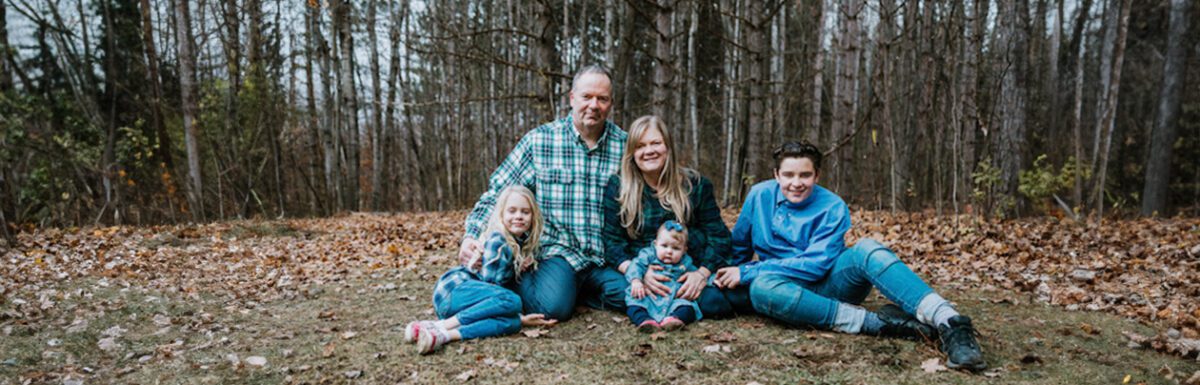
And let’s see. I have a dog and a cat and a stepson who’s 17, a daughter who’s 10, and a daughter who’s three.
Jamie: Awesome.
Judy: And I raised another girl and she is. 30.
Jamie: So super fun. Yeah. So be, before we started recording, we talked about where to start with your story, and I think it, it starts with PCOS and them telling you you couldn’t have a baby at all.
Judy: Yes, I was diagnosed with, actually before PCOS, I was diagnosed with diabetes when I was about 12 and it’s type two, which is very unheard of for youth to have. But I did and then PCOS at about 16 and I was basically told I could never have children and I did attempt in my twenties and nothing happened.
I was, I did a lot of therapy and a lot of work on myself and I was super like taking care of my body and taking care of PCOS. I saw Chinese herbalists to take care of it. I took a supplement called Vitex. It’s like a chase berry tree. Mm-hmm. Which is supposed to regulate your hormones.
Then I had hooked up with an ex-boyfriend and done all this forgiveness work and surprise, I was pregnant at 37. I had her at 38 with my first.
Jamie: Did you go through this healing? Was that so you could have a baby or was there something else going on?
Judy: I had basically gotten to a point in my life where I had accepted that maybe I could look into adopting an older child.
I had accepted that I wouldn’t have one, so I fully believed it was impossible, although I had always done like manifestation and energy work to kind of heal my body. But I had to let go of the idea of needing and wanting my own. I kind of accepted that I’m 38 now. It’s probably not gonna happen.
I even moved to a town where I normally wouldn’t have wanted to raise a child. ’cause I was like, it’s cheaper housing. Why not? It’s not gonna happen right now. Uhhuh. When I found out I was pregnant, my sugars had been like level as a diabetic, and my PCOS was under control. I was regular and all of a sudden I wasn’t, and my sugars went really high and I thought, what is going on?
And then I was like, huh, I haven’t had a period in like two months. I went and got a test and sure enough, I took six more and they, they, all of them, but one came out positive and I remember calling my friend and being like, is it possible for them to be falsely positive? And she said usually falsely negative. I think you better go to the doctor. I was pregnant.
Jamie: What were you thinking at that time when you saw all these. Positive tests.
Judy: Just how impossible it was because I’d always been told, no, it’s not gonna happen for you. Sorry. And then, and then I felt very, very blessed and very happy.
Jamie: Yeah. So how did you find a doctor? Did you just go to your regular doctor that you.
Judy: In, in Kennedy. Here we have our gps, and then we get referrals to obstetricians if we need them. So because I was diabetic, I needed them and I was on an incredible amount of insulin during my pregnancies, both of them. I think I got up to about 300 units a day, which I don’t know if you know, but usually it would be like four or five. And I was at like 300.
Jamie: Oh my.
Judy: ’cause I’m, yeah, with PCOS, it’s very insulin resistant and they were making me eat carbs, which of course they do. So my sugars were going high and I needed more insulin, but I’m insulin resistant.
So it was doing, yeah.
Jamie: Wow.
Judy: Other than that, though, my pregnancy was very, I mean, I felt very good. I was very healthy up until I had my first, I was doing spin classes three times a week.
Jamie: Wow.
Judy: Yeah. But I did have her at 24 weeks, so.
Jamie: Oh my gosh. Yeah. And she survived at 24 weeks.
Judy: She survived. She was born in a bed pen. ‘Cause I had a broken call button and no doctors were around. Her father delivered her and she lived for six minutes without intubation and then they intubated her and she’s like my multiple miracle ’cause she beat all the statistics and it’s perfect.
Jamie: That’s incredible. And I’m 27 weeks, so it’s like, wow.
Judy: You’re pa you’re past the, the worry. You’re good at 27.
Jamie: Yeah. Oh, okay. So. After this one, did you want a second one, or how did that kind of come about?
Judy: Well, we kind of had to get over the whole NICU experience and her health and then her dad and I weren’t really together, together at the time, like we were up and down, and then she was about five. And I said, you know what, we’re clearly we can’t get our stuff together, so let’s just go our separate ways and be civil parents. Mm-hmm. And he didn’t want that. So we kind of, I think we went on a trip actually and ended up back together. And on that trip I had started to take Btechs again to clear my hormones and help my body get back in track, and I got pregnant again.
But that pregnancy, I went off Vitex at 12 weeks and I had a miscarriage. So, but we ended up back together. It was horrible to lose it. ’cause I was 41 I think at the time.
Jamie: Oh wow.
Judy: Yeah. And then ended up. He was like, let’s have another one. I was like, I don’t think it can happen. And we didn’t use any protection, but it was kind of like, whatever happens, happens.
Jamie: Mm-hmm.
Judy: And I was 45 and I was like, it’s not gonna happen babe. I’m in menopause. I have all the signs. And then we had something to eat and I threw up and he is like, that’s not a sign. And sure enough, I was pregnant.
Jamie: So what was it like? Experiencing these positive pregnancy tests.
Judy: It was amazing. But I was also like, yep. I went back on Vitex again. So here I am pregnant again. And it was pretty amazing. Scary though to be 45 and think, oh, what are people gonna think? How am I gonna handle telling my work and all these different aspects of it.
Jamie: Yeah. Was the miscarriage on your mind?
Judy: Not really because it had been amazing to find out I was pregnant at the time, but also so surreal that the miscarriage, I handled it pretty well because I, I didn’t think it was possible anyway, so I think when I got pregnant again, I knew it was gonna be okay, so, mm-hmm. And we were together. Yeah. We were living in a house together and everything was good.
Jamie: How was your pregnancy?
Judy: So again, around 12 weeks I went off Vitex because everything says don’t take any supplements ’cause we don’t know what they do. I had never been told about why I had my oldest, Myra is so young, like, why she was born at 24 weeks.
They couldn’t figure it out. But as soon as I went off Vitex, my cervix shortened and I had a really good obstetrician team, and they told me that my what did they call it? I think it’s irritable cervix or something. But anyway, because I went off the hormones, I wasn’t making enough progesterone in my body because of the PCOS.
So my cervix had shortened to 1.6 were in Canada, so it very small. It’s supposed to be three, and it was 1.6. So I was at risk of losing the baby. So she put me on instant bedrest. So I was 14 weeks, I think, when I went on bedrest from work.
Jamie: Whoa.
Judy: Yeah, it was horrible. And then I was like, I’m going to take vi. Like I did my research and I discovered that you could, mini babies are being born while their moms are taking Vitex. So I started it again and she put me in for an emergency circlage, which is when they sew. Here cervix so the baby doesn’t come out. And I was on bedrest from then on, but at 16 weeks I had the circlage placed, so it was like a healthy-ish pregnancy, but again, by the end I was taking 600 units of insulin a day.
Jamie: Oh, that’s twice as much as your first pregnancy.
Judy: Yeah, because I went. Like she didn’t want to come out. I had, I went all the, I went all the way to 37 weeks with my second because of this.
Jamie: That’s great.
Judy: And the doctor was like, I don’t know, this Cerus is like a miracle because you’re, you’re back up to three.
And I was like, yeah, I think it’s the Vitex. But I didn’t tell my doctors I had gone back on. Mm-hmm. Yeah. Mm-hmm.
Jamie: And did you have the same doctor as you did at 38?
Judy: No no, because there had been like seven years in between they had all kind of shifted and moved around.
Jamie: Did you find out the sex.
Judy: I did during pregnancy, both. And both of them we kind of thought were gonna be boys, but, well, the second one I kind of knew was a girl, but my husband kept saying, well, I think it’s a boy. We’re gonna name it Wyatt. And I was like, I don’t know. So my oldest we had the name picked out as soon as we got found out.
It was a girl and my youngest we had the name picked out before she was born.
Jamie: Oh, that’s cool. How did you find out?
Judy: We, we have ultrasounds up here very early on, and then because of my high risk geriatric pregnancy and diabetes, we had ultrasounds, I think every other week. I got one.
Jamie: What was it like with a doctor in your age? Were they concerned?
Judy: So some were. Almost rude about it. And some were really supportive. My obstetrician was very supportive. She, I mean, she was really close to h retiring. I think I was one of her last cases. Patients, I guess. But she was very supportive.
Some of them not so much. Mine didn’t really say much when I told them so, and with my other pregnancy, the, the rude experience, she basically told me I didn’t have any business getting pregnant. So yeah, I left in tears and then went to a specialist from there. I had this. I always had this hope that I would have this beautiful birthing experience with candles and dark. And a midwife. And a doula and yeah, that didn’t happen for either one, but it is what it is.
Jamie: Yeah. Is there any products or anything that helped you through pregnancy?
Judy: Mm. Other than the Vitex? Not really. Not that I can really think of. Bed rest was really difficult because I’m very, I’m like a DHD, so I’m constantly on the go, so I had to really slow down.
So I’d play games with my children in the bed and I actually kept seeing some of my clients just through video while I was like propped up with pillows. But products wise, I don’t think so. There wasn’t very many things that I was specific about.
Jamie: Okay. And is there anything else about your, your pregnancy?
Oh, you said before we recorded that you were pregnant with your daughter. At the same time, right?
Judy: Oh yes. My oldest she was pregnant at the same time, so we went shopping for maternity clothes together and it was like funny and cute, but at the same time I was like, oh, I can’t believe this isn’t so almost embarrassing, but amazing at the same time.
Yeah.
Jamie: And how old was she when she was pregnant?
Judy: She has three. So she had her first at 18 and then I think 22 and then 25.
Jamie: How fun. So they’re probably really close. Yeah. Bonding wise.
Judy: Yes, for sure.
Jamie: How fun. Yeah. And how did you prepare for this baby Because they were a little far apart in age.
Judy: Very. So the funny thing is I had given everything away, but most of the clothing and stuff I had given to a friend who has a daughter in between mine. So I got it all back.
Jamie: Nice.
Judy: It nice. It worked out. Yeah. So it was really cute to like dress this one, this one is way bigger than my first one in the clothes that the older one had already worn. It brings back a lot of memories. That stuff.
Jamie: Yeah. And for your birth, what was your plan like for this one?
Judy: So I was trying to stay open-minded and not be too disappointed that I wasn’t having that whole candlelit experience with this one, but I thought I would have a natural birth at least. And at the time it ended up being 30 hours of labor where they gave me the picton, is it called? It’s
Jamie: Oh, Pitocin.
Judy: It’s a Pitocin, yes. They gave me that to put me into labor because I was 37 weeks and that was always the plan. And then they put the balloon inside of me and it was like almost within a couple hours it started. So then I was in labor and I thought, okay, here we go.
I’m gonna get to have a natural birth. And then they told me when I was about. 28 hours in that I was eight centimeters dilated and couldn’t get to 10 because I had an irritable cervix or something, which they had said a along the line because I went into labor a few times and then was sent home.
And they kept saying, oh, you have an irritable cervix. And I thought, oh, ha ha, that’s funny. But it, but when the third nurse said it, I was like, okay, there’s something to this. It must be an actual thing. Mm-hmm. And apparently it is. So yeah, my cervix doesn’t dilate the whole way, I guess.
Jamie: Huh? So when did they cut the shirt collage?
Judy: They cut it at 36 weeks. So I could go into the labor if I wanted to. And I, I went off Vitex at 33 weeks and started moving around a little bit more ’cause I felt it much safer. Mm-hmm. And then they did give me epidural. Mm-hmm. And it was the worst experience of my life, I think that remember why was it?
It was so painful and it went on for so long, and I just kept saying, are you done yet? Like, you must be done yet and please be done soon. And it was just so painful and I think that was probably the worst of it all. They wanted to give that to me because my blood pressure had been high. I wasn’t in a danger zone, but they didn’t want me to enter the danger zone with my blood pressure.
Jamie: Mm-hmm.
Judy: So, and then they worried about the baby being in trouble ’cause it had gone on for so long and she just wasn’t coming out where the other one just surprised. I ended up having a c-section at thir when I hit 30 hours. So, yeah.
Jamie: And did you give up or were they suggesting a c-section?
Judy: They said it’s time because you’re, it’s not progressing any past eight, so we need to get her out because otherwise she’ll be in trouble.
Jamie: Yeah.
Yeah. Well, how was a C-section?
Judy: Not fun. Definitely. It’s one of the weirdest experiences, but I’d already done this or collage, so I’d already done something really, really scary. Right. And I knew I wasn’t gonna lose her now. It was just my body that was gonna be cut open. So I, it wasn’t as much of a risk, I guess I wasn’t as scared.
Jamie: Mm-hmm.
Judy: Just disappointed.
Jamie: Yeah, because you wanted a vaginal delivery.
Judy: Yeah, yeah. I wanted to experience that. With a healthy baby.
Jamie: So walk us through going in the or, how was that
Judy: going in the OR was intimidating, and I guess it was during COVID, right? So my partner could be with me because I got admitted early on. Some people didn’t even get to have their partner. But he couldn’t come in until I was under the anesthesia and like my body was frozen. So it’s such a weird experience to be like locked in place with your arms out and then so many people around the room and I don’t know what’s going on down there. So it was just. An odd experience for sure.
Jamie: Mm-hmm.
Judy: But he’s very supportive and he sat there I think he got to cut the cord, but it’s all kind of a blur. And then I remember them saying, oh, we’re gonna put her, put her on you so you can hold her. And thinking, well, I can’t even feel anything. How am I gonna hold her?
She’s gonna fall. So I remember being worried about that, but, and then I was shaking from the trauma of it.
Jamie: Yeah, the medicines
Judy: caused that. Yeah.
Jamie: Yeah.
Judy: Yeah. It’s a weird experience.
Jamie: Yeah. So when they put her on you, were they trying to breastfeed or just having that skin to skin contact?
Judy: Skin to skin, yeah. Okay. I, I kind of knew I probably wouldn’t be able to breastfeed and I wasn’t able to just produce enough milk, so I didn’t even attempt it other than a couple times maybe. But as I said, I was on like really copious amounts of insulin, so I only got to hold her for maybe 20 minutes and they realized that her sugars were dropping, so she got rushed into the nicu.
Jamie: Now, did you also have the steroid to help with her lungs and stuff like that? Was that necessary?
Judy: No. ’cause she was 37 weeks, so she was good. Okay. My first, my first one I did.
Jamie: Yeah. Yeah. Okay. Well, what was the recovery like?
Judy: Recovery. I was just more concerned about her sugars dropping because I’m sure I still had a little bit of trauma from my first one and all the medical experiences with her.
And I remember being determined that I was not leaving her in the hospital until like she was coming home with me. Mm-hmm. So the one doctor was gonna release me right away and then my doctor came around and I was like, please let me stay in. She did so. I got to stay. I think we were in there for two or three days.
Jamie: Oh, that’s not bad.
Judy: No, it wasn’t too bad. Well, her sugar stabilized, so
Jamie: Yeah. That’s really good. Mm-hmm. About the breastfeeding, why didn’t you think you could breastfeed?
Judy: Just my from my body, like insulin resistance. And I had tried so hard with my other one and I was producing like little tiny bottles of milk and pumping like five hours a day while she was in the nicu. And I didn’t want that again, I didn’t want the pressure, so I was like, Hmm, it’s okay. I can let go of that. Sure. Yeah.
Jamie: Okay. And it’s because of the diabetes? Yes. That probably. Okay. I did. Is that common?
Judy: I don’t know. I mean, I know some women can and are diabetic, but for my body just, it didn’t. I just didn’t produce the milk and I, I tried everything from like the breastfeeding cookies to like the herbs and supplements you can take with my first, and I just did not want that kind of pressure.
We put so much pressure on ourselves as women we do to, yeah. To do the perfect way and sometimes the perfect way is just the way that works. Yeah. Yeah.
Jamie: Let’s see. So how was like your recovery with like your scar and the surgery?
Judy: That one was horrible. I hated it. So I’m a little chunky and I was huge during my pregnancy. I only gained like 25 pounds, but I was huge. Like people kept saying, are you having twins? And she wasn’t big either. She was only six pounds. So I still don’t quite understand why I got so big. I was huge. And so I had like this gross skin flap that hung down and nobody talks about this kind of stuff, but my scar, it wouldn’t stay dry.
So it got wet and then it got like infected and it was horrible and I was quite concerned ’cause I didn’t, I had no idea. My mom passed away a long time ago. I don’t really have a lot of women to talk to about what’s going on.
And then I did talk to a cousin who’s not tiny herself, and she told me to put a receiving blanket in between. So I did, and it stayed dry and healed, but it was horrible and I was really worried it wasn’t going to heal. I don’t care about the scar, really. I’m not that vain and I don’t wear a bikini, but I was worried about it healing and, and carrying, especially with diabetes. Right. It takes longer for us to heal.
Jamie: Yeah. And mentally how was postpartum?
Judy: I think I was pretty good with this one. I was tired. It’s a lot, but I was almost, again, that feeling of surreal that. I didn’t think I’d have one. And now all of a sudden I have two and there’s this worry when it’s or was for me anyway with my second that, am I gonna love her the same? Because my first was like such a miracle, right? But it was instant kind of falling in love,
Jamie: oh, I love to hear that. Do you plan to have more kids in your forties?
Judy: No, definitely not. My husband jokes all the time, but I’m like, I got an IUD when she was, I think five months old. And it’s staying in as long as it needs to. No. Just, I mean, I think I would’ve if it had been, if I didn’t have that issue with my cervix, but the fact that I had to stay on bedrest from 14 weeks on, it was torture for me to not be up and moving, and I missed out on so much with my oldest. So, yeah, no, I don’t want to have another one.
Jamie: What has been your biggest challenge being pregnant in your forties?
Judy: I mean, I guess the expected response is energy, but for me it’s given me more energy, so it kind of made me younger again. I guess the biggest challenge would be. I don’t know if this is just in my forties though. My first didn’t like play with electrical outlets or get into stuff or, she wasn’t a high risk.
This one will do anything and everything and it’s both amazing to kind of monitor that spirit and allow it, but such a challenge to. Not get frustrated. Right. And moody. And she’s still not sleeping all the time through the night. She’s very attached. And so there’s that piece of, oh my God, I have to go through another night without a full night of sleep and I’m so exhausted, but I wouldn’t trade it for the world.
Jamie: Is there anything you’d recommend that would help prepare someone for pregnancy and birth over 40?
Judy: Have a support team and know who to call when you need to, and also that everything is gonna be okay. Yeah, that’s the biggest really not to panic. It’s okay. I remember telling my boss and I was so scared, and she was like, Hmm, Judy, I have a friend who had one at 50. You’re fine. So I was like, okay.
And I worried
Jamie: for nothing. And what advice would you give yourself? When you were pregnant, if you could go back?
Judy: Just relax. Mm-hmm. Yeah. Just relax. It’s gonna be okay. Yeah, because I worried a lot.
Jamie: Yeah. Now we have a lot of listeners who are trying to conceive over 40. What advice do you have for those ladies?
Judy: Research. So, not necessarily for what to do to get pregnant, but what to do to get your healthy hormones in check and your body in check do therapy. So I do a therapy called brain spotting. It can help clear a lot of blocks or past traumas. PCOS is directly tied to trauma. So a lot of people may have history of trauma. I definitely did look into Vitex ’cause it certainly did it for me. And don’t necessarily let go of the possibility, but at the same time, don’t think anything is impossible. ’cause nothing is.
Jamie: I love that. Would you like to tell us more about your practice and how women can work with you?
Judy: I am a therapist and a manifestation coach, and I have a practice here in Ontario, but I can also do virtual where I help people clear limiting beliefs and do therapy to resolve past traumas. But really I focus on being in the present moment and making everything possible that you want because everything is.
Jamie: Yeah, would you like to share all your, your website and your Instagram? Oh, for sure,
Judy: of course. My Instagram is manifestation therapy with no space and my website is www.manifestationtherapy.com.
So, and I have a newsletter that I’ve started where I provide some meditations and I have a blog and that kind of stuff.
Jamie: Do you do one-on-one or is this a group coaching?
Judy: Right now it’s one-on-one, but I do hope to expand into group coaching.
Jamie: Mm-hmm.
Judy: And also, I’m hoping to work with therapists as well to help them kind of incorporate the strategies of manifestation in the universal principles.
Jamie: I love it. Thank you so much for coming on and sharing your story.
Judy: Thank you for having me. It’s been wonderful.


I don’t understand how she was pregnant with her oldest daughter bc her oldest daughter would am have only been nine or so? Was it the step-son’s girlfriend?
Susan, she quickly mentioned on the show that she has an older daughter she raised but doesn’t go into much detail. You are correct, she wasn’t pregnant with her daughter she had when she was 37. That would be a good follow-up question for her!